
6 Best Cat Treats: Crunchy, Lickable, Freeze-Dried and Pill Pockets
Six cat treats picked by job: everyday crunchy rewards, lickable purées, fish-free tubes, single-ingredient bites, a VOHC-listed dental treat and pill pockets.
 By Olivia Parker
Updated November 21, 2026

The best cat treat is the one that fits the job: a small crunchy piece for everyday rewards, a lickable purée for hand-feeding, a soft pocket for pills or a single-ingredient bite for training. Whatever you pick, keep treats small. The WSAVA Nutrition Committee says treats should make up less than 10% of a cat’s daily calories, and they should never replace a meal.
Below are six picks, each for a different need, followed by a comparison table, a simple way to count treat calories, tips for training and pill time, and a short buying checklist.
Our Top Picks
Pros
- Crunchy outside, soft inside
- Under 2 calories per treat (listing)
- Resealable 30 oz tub
Cons
- Labeled for adult cats, not kittens
- Large tub makes over-treating easy

Pros
- Lickable purée tubes for hand-feeding
- 91% moisture, 6 calories per tube (listing)
- Labeled for all life stages
Cons
- Wet tubes can get messy
- Tuna-led variety box

Pros
- Made without fish or seafood ingredients
- Chicken, beef, duck or catnip recipes
- Up to 3 tubes a day for an average adult cat (listing)
Cons
- 7.9 kcal per tube, more than Churu
- Catnip recipe will not suit every cat

Pros
- One ingredient: chicken breast
- About 175 treats per 2.3 oz bag
- About 2 calories per treat (listing)
Cons
- Freeze-dried raw meat; WSAVA notes a pathogen risk
- Small bag
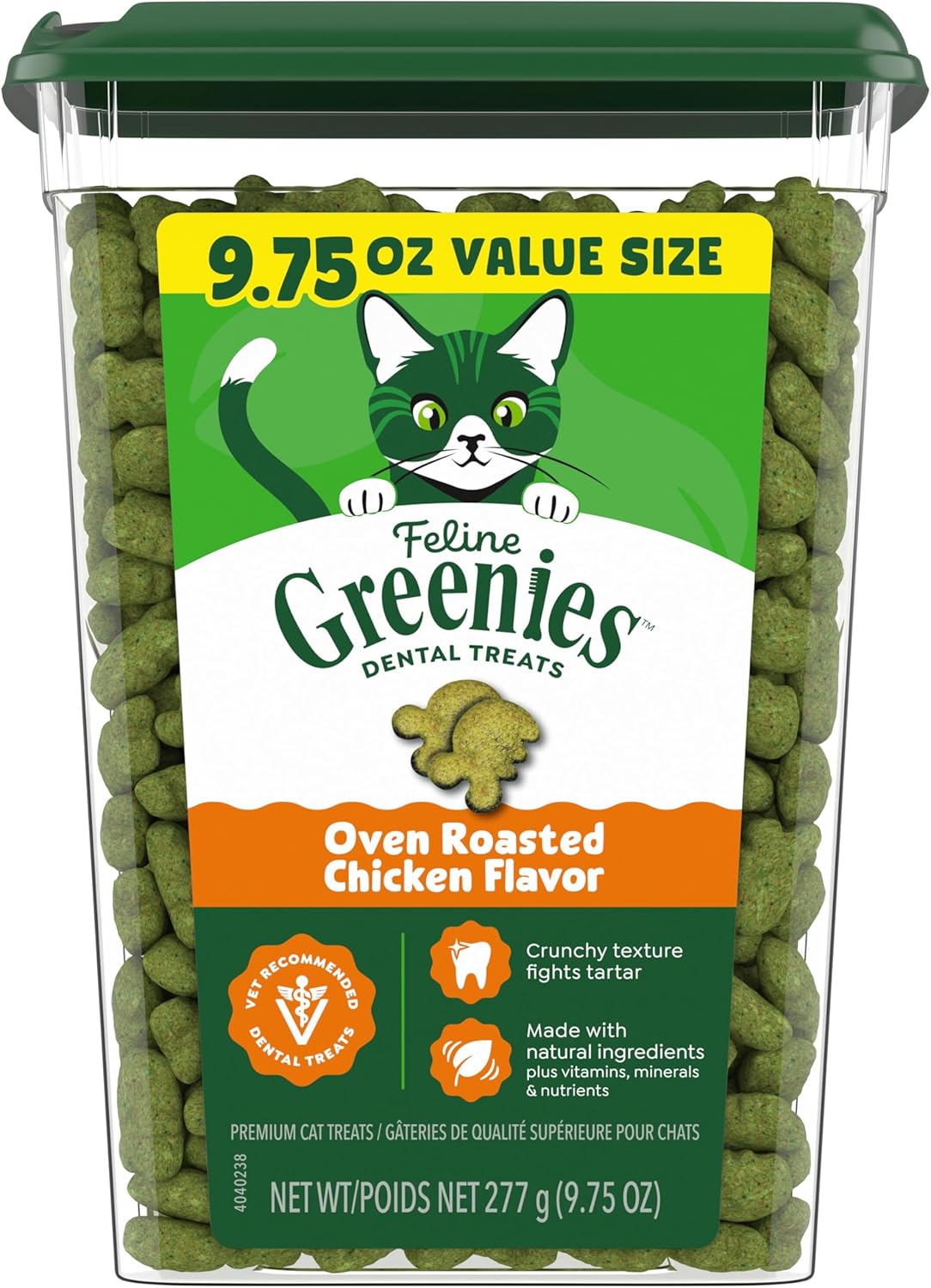
Pros
- On the VOHC accepted list for tartar
- Less than two calories per treat (listing)
- Oven roasted chicken flavor, 9.75 oz
Cons
- Adult cats only
- Does not replace brushing or vet dental care

Pros
- Moldable pocket wraps a pill or capsule
- Chicken flavor helps mask medicine (listing)
- 45 count pouch
Cons
- Contains wheat flour
- Check with your vet that the pill can go with food
Best everyday crunchy treat: Temptations Classic (Tasty Chicken)
Temptations Classic suits owners who want a small, everyday reward for an adult cat. Each piece is crunchy outside and soft inside, and the listing puts each treat under 2 calories, so you can give several and still stay within a sensible daily limit. The resealable tub also gives you a sound to work with: the listing suggests shaking the pack so your cat comes running, which is handy when you need to call a cat indoors.
- Crunchy outside, soft inside (Amazon listing)
- Under 2 calories per treat, per the listing
- The listing says it is complete and balanced for adult cat maintenance
- Resealable 30 oz tub; other flavors such as Savory Salmon and Hearty Beef are sold separately
Consider: it is labeled for adult cats, not kittens, and a 30 oz tub makes it easy to over-treat, so count pieces rather than pouring a handful.
Best lickable treat: INABA Churu Purée (Tuna Variety)
Churu is a squeezable purée in a tube that you hold while your cat licks, which makes it a good choice for bonding, shy cats and slow introductions. The listing says each tube is 91% moisture and 6 calories, and it also suggests using it as a food topper or to help disguise medication. This tuna variety box holds 50 half-ounce tubes.
- Lickable purée tubes, 0.5 oz each, 50 tubes (Amazon listing)
- 91% moisture and 6 calories per tube, per the listing
- Listing says grain-free, preservative-free, carrageenan-free and no artificial colors
- Taurine, vitamin E and green tea extract added, per the listing; labeled for all life stages
Consider: tubes are wet and can get messy, this box is tuna-led, and at 6 calories a tube the calories add up faster than small crunchy treats.
Best fish-free lickable treat: Delectables Squeeze Up Non-Seafood
Some cats turn away from fish, and some owners prefer to avoid it. This Delectables variety pack is a lickable purée made without fish or seafood ingredients, using chicken, beef, duck or catnip recipes according to the listing. The listing also gives a clear serving guide: up to 3 tubes per day for an average adult cat.
- Non-seafood purée tubes, 54 count (Amazon listing)
- Up to 90% moisture and 7.9 kcal per non-seafood tube, per the listing
- Listing says grain-free with no artificial colors or flavors and no added preservatives or fillers
- Can be fed from the tube or squeezed over dry food as a topper; labeled for all life stages
Consider: each tube carries a little more energy than a Churu tube based on the two listings (7.9 versus 6 calories), and the catnip recipe will not interest every cat.
Best single-ingredient treat: PureBites Freeze-Dried Chicken
PureBites is for owners who want a label with one ingredient. The listing says the only ingredient is chicken breast, freeze-dried raw in the USA, with about 175 treats per 2.3 oz bag at roughly 2 calories each. The listing suggests using them as a high-value treat or as a topper, which makes them a good fit for training sessions.
- One ingredient: 100% chicken breast (Amazon listing)
- Freeze-dried raw, sourced and made in the USA, per the listing
- About 175 treats per 2.3 oz bag, about 2 calories per average treat
- No added colors, fillers or sweeteners, per the listing; labeled for all life stages
Consider: these are raw meat that has been freeze-dried, and the WSAVA guide notes that unprocessed, raw animal-based treats carry a risk of pathogen transmission. Ask your veterinarian first if your cat has a health condition, and wash your hands after handling them.
Best dental treat: Greenies Feline Dental Treats
Greenies Feline is a crunchy treat for adult cats that the listing says is shaped to clean down to the gumline. It also appears on the Veterinary Oral Health Council accepted products list, where Feline Greenies Dental Treats are accepted for helping control tartar. Each treat is under two calories, per the listing.
- Crunchy dental treat for adult cats (Amazon listing)
- Listed by VOHC for tartar (not plaque)
- Less than two calories per treat, per the listing
- Oven roasted chicken flavor, 9.75 oz tub
Consider: it is for adult cats only, and no treat replaces tooth brushing or the dental checks your veterinarian does.
Best for giving pills: Greenies Feline Pill Pockets
Pill Pockets solve a different problem: getting a tablet or capsule into a cat that refuses it. You place the pill inside the soft pocket, pinch it closed and offer it like a treat, and the listing says the chicken flavor helps mask the taste of the medicine.
- Soft, moldable pocket that wraps around a pill or capsule (Amazon listing)
- Chicken flavor; a Tuna and Cheese flavor is sold separately
- No artificial flavors or preservatives, per the listing
- 45 count, 1.6 oz pouch
Consider: the ingredient list includes wheat flour after chicken, the pockets are larger and softer than training treats, and you should check with your vet that the medicine can be given with food.
Comparison Table
| Treat | Type | Texture | Life stage (listing) | Best for |
|---|---|---|---|---|
| Temptations Classic | Crunchy treat | Crunchy shell, soft center | Adult | Everyday rewards, calling your cat |
| INABA Churu | Lickable purée | Creamy | All life stages | Hand-feeding, bonding, food topper |
| Delectables Squeeze Up Non-Seafood | Lickable purée | Creamy | All life stages | Cats that skip fish |
| PureBites Chicken | Freeze-dried single ingredient | Light, dry pieces | All life stages | High-value training rewards |
| Greenies Feline Dental | Crunchy dental treat | Crunchy | Adult | Adding a VOHC-listed treat to a dental routine |
| Greenies Pill Pockets | Pill pocket | Soft, moldable | Adult cats (listing text) | Giving tablets and capsules |
How Many Treats Can a Cat Have?
Treats should stay a small slice of your cat’s diet. WSAVA sets the limit at less than 10% of daily calories, and the Cornell Feline Health Center says treats should not exceed 10 to 15 percent. VCA Animal Hospitals also uses the 10% rule for treats of any kind. Aiming for under 10% keeps you inside all three.
WSAVA gives a simple table for an average healthy adult cat at an ideal weight. Your vet can tell you your own cat’s daily energy needs.
| Cat’s body weight | Maximum calories from treats per day (WSAVA) |
|---|---|
| 3 kg (about 6.6 lb) | 20 |
| 4 kg (about 8.8 lb) | 22 |
| 5 kg (about 11 lb) | 25 |
| 6 kg (about 13.2 lb) | 26 |
| 7 kg (about 15.4 lb) | 28 |
For a 4 kg cat, three Churu tubes at 6 calories each, per the listing, already use 18 of those 22 calories. Crunchy treats under 2 calories each give you more pieces for the same budget. If the calories are not on the label, WSAVA suggests contacting the manufacturer.
Human food adds up fast as well: WSAVA lists 1 oz of canned tuna in water at 36 calories, more than a whole day’s treat budget for most cats. Cornell adds that milk is not generally recommended as a treat because many cats are lactose-intolerant. If your cat has a medical condition or eats a prescription diet, ask your veterinarian which treats, if any, fit.
Using Treats for Training and Pill Time
WSAVA describes treats as training aids and rewards for good behavior that can also give mental stimulation and strengthen the bond with your cat. For training, small and tasty works best, so break larger pieces and give the reward the moment your cat does what you asked. Treats work well for teaching a cat to come when called, to use a new scratching post or to step calmly into a carrier. If scratching is the goal, our guide on getting a cat to use a scratching post shows where rewards fit in.
For medication, International Cat Care suggests trying to hide small tablets in a little of your cat’s favorite food, but to check with your vet first that the tablet can be given with food. It also advises against mixing medicine into your cat’s main meal, because that could put your cat off eating. A pill pocket or a small dab of lickable purée keeps the medicine in one small portion your cat finishes quickly.
How to Choose Cat Treats
- Match the treat to the job. Crunchy pieces for daily rewards, purée for hand-feeding and bonding, soft pockets for pills, single-ingredient bites for training.
- Check calories per piece. Small, low-calorie pieces let you reward more often without going over the daily limit.
- Read the life stage. Some treats are labeled for adult cats only. For young cats, see our kitten care guide and pick treats labeled for all life stages.
- Think about protein preferences. If your cat ignores fish or you want to avoid it, choose a poultry or non-seafood option.
- Size and shape. WSAVA advises treats of an appropriate size and shape to reduce the risk of choking, and supervising your cat with chews and treats.
- Raw or cooked. WSAVA notes that raw animal-based treats carry a pathogen risk, so talk to your vet if anyone in your home or your cat has health concerns.
Main meals still matter most. Treats should never replace a complete and balanced diet, and if you are feeding a young cat, our guide to the best kitten food covers the meals that should make up the other 90%.
Frequently Asked Questions
How many treats can a cat have a day?
Keep treats under 10% of your cat’s daily calories. For an average 4 kg adult cat, WSAVA puts that at about 22 calories a day. Check the calories per piece on the package and ask your vet about your own cat.
Can kittens eat cat treats?
Some treats are labeled for all life stages and others for adult cats only, so read the label. Keep treats small and occasional so a kitten fills up on its regular food.
Are freeze-dried raw cat treats safe?
WSAVA notes that unprocessed, raw animal-based treats carry a risk of pathogen transmission. If you use them, wash your hands after handling, and ask your veterinarian first if your cat has a health condition.
Do dental treats replace brushing a cat’s teeth?
No. A VOHC-listed treat such as Feline Greenies is accepted for helping control tartar, but it is an add-on, not a replacement for brushing or veterinary dental care.
Can cats have milk as a treat?
Cornell says milk is not generally recommended as a treat for cats because many cats are lactose-intolerant. Choose a treat made for cats instead.
Conclusion
For everyday rewards, Temptations Classic keeps each piece under 2 calories, per the listing. Churu is a good lickable treat for bonding and hand-feeding, and Delectables Squeeze Up Non-Seafood suits cats that skip fish. PureBites works as a one-ingredient training reward, Greenies Feline Dental Treats are the VOHC-listed option for tartar, and Pill Pockets make tablets easier. Whichever you choose, keep treats under 10% of daily calories, and if you are setting up for a new cat, our new kitten checklist covers the rest of the basics.
Sources
- WSAVA Nutrition Committee: Feeding treats to your cat
- Cornell Feline Health Center: Feeding Your Cat
- VCA Animal Hospitals: Grass Treats for Cats
- International Cat Care: How to give a cat medication
- Veterinary Oral Health Council: Accepted Products
About the author
Olivia Parker covers cat litter types, litter box habits and common litter problems, plus food choices and feeding routines for dogs and cats. Guides draw on sources such as the ASPCA, the Cornell Feline Health Center and veterinary hospital guidance, and recommend talking to a veterinarian before changing a pet's diet or when litter habits suddenly change. Olivia Parker does not hold veterinary or nutrition credentials.