
6 Best Clumping Cat Litter Picks: Clay and Plant-Based
Six clumping cat litters compared by material, scent, texture and weight, plus clay vs plant-based litter and how to keep clumping litter fresh.
 By Olivia Parker
Updated November 20, 2026

The best clumping cat litter is one your cat will actually use: for most cats that means an unscented litter with a fine to medium texture. The ASPCA notes that most cats prefer clumping, unscented litter, and that cats generally like a medium to fine texture. After that, pick the base material (clay, wheat, grass or tofu) by how much weight you can carry, how much dust and tracking you can live with, and how your cat reacts.
The six picks below are all clumping litters, chosen to cover different needs rather than six versions of the same bag. Clumping strength, dust and odor claims come from each Amazon listing, since no veterinary source compares brands on those points. If smell is your main problem, our guide to the best cat litter for odor control ranks picks by that instead.
Our Top Picks
Pros
- 100% bentonite clay, medium grain
- Unscented
- Hard clumping, per the listing
Cons
- 40 lb bag is heavy to lift
- Clay does not biodegrade

Pros
- Lighter than standard clay, per the listing
- Light, tight clumps, per the listing
- Multi-cat formula
Cons
- Scented
- Box directions call for 3 to 4 inches
Pros
- Clumping clay in a large size
- Tight clumping, per the listing
- Fresh scent
Cons
- Scented
- 42 lb is heavy

Pros
- Plant-based wheat litter
- Multi-cat formula with enzymes, per the listing
- No added dyes or perfumes, per the listing
Cons
- Wheat-based
- Pellet form may need a slow switch

Pros
- Made from grass seed
- Unscented
- Soft, sand-like texture, per the listing
Cons
- 10 lb bag is small for multi-cat homes

Pros
- Tofu pellets with added charcoal
- Unscented
- Low tracking pellet shape, per the listing
Cons
- Pellets differ from fine texture
- Soy-based
Unscented bentonite clay: Dr. Elsey’s Ultra Unscented Clumping Clay
Dr. Elsey’s Ultra is a plain, unscented clumping clay, which lines up with what the ASPCA and Cornell say most cats prefer. The listing describes medium-grain bentonite that forms hard clumps and helps keep moisture off the bottom of the box, so scooping leaves less stuck-on mess. It comes in one big bag for single or multi-cat homes.
- 100% bentonite clay, medium grain (Amazon listing)
- Unscented
- Hard clumping and low tracking, per the listing
- 40 lb bag; listing gives a recommended age of 1 month and up
Consider: a 40 lb bag is heavy to lift and pour, and clay does not break down like the plant-based picks below. This litter also appears in our odor control guide; here it is the baseline pick for firm clumps without scent.
Lightweight clay: Purina Tidy Cats LightWeight Instant Action
Tidy Cats LightWeight suits owners who find full-weight clay hard to carry up stairs or pour into several boxes. The listing says it weighs less than standard clumping clay while forming light, tight clumps that are easy to scoop. It is made as a multi-cat formula.
- Lightweight clumping clay, multi-cat formula (Amazon listing)
- Scented, with an ammonia blocker, per the listing
- Light, tight clumps, per the listing
- 17 lb box
Consider: it is scented, and most cats prefer unscented litter. The box directions call for 3 to 4 inches of litter, which is deeper than the 1 to 2 inches the ASPCA and Cornell suggest, so watch how your cat responds to the depth.
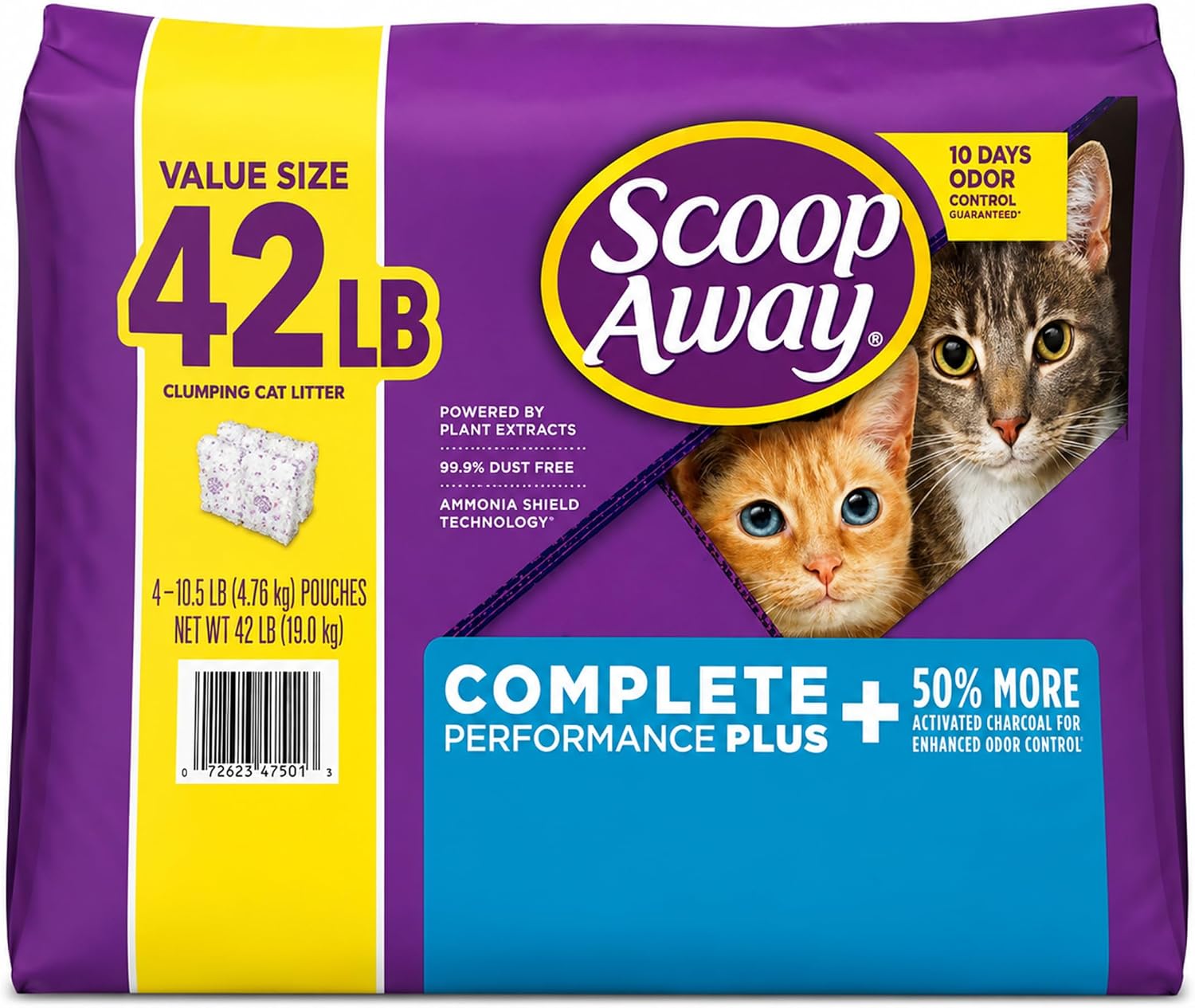
Scented clay in a big box: Scoop Away Complete Performance
Scoop Away Complete Performance is a second large clay option for homes where a light scent is wanted and the cat accepts it. The listing describes a tight-clumping formula that leaves little waste behind after scooping, plus a low-dust formula. It comes in a large 42 lb size.
- Clumping clay (Amazon listing)
- Fresh scent
- Tight clumping and low dust formula, per the listing
- 42 lb box
Consider: it is scented, and VCA notes that many cats dislike litter with strong deodorizers or perfumes. At 42 lb, it is also one of the heaviest picks here.
Wheat litter for multi-cat homes: sWheat Scoop Natural Wheat Multi-Cat
sWheat Scoop Multi-Cat is a plant-based clumping litter made from wheat, designed for homes with several cats and several boxes. The listing says it uses natural enzymes for odor, has no added dyes or perfumes, and clumps fast and firm. It is lighter than clay, per the listing.
- Made from domestically sourced wheat (Amazon listing)
- Multi-cat formula with odor-neutralizing enzymes, per the listing
- No added dyes, perfumes or chemicals; low dust and low tracking, per the listing
- Pellet form, 25 lb bag
Consider: it is wheat-based, so skip it if you avoid grain products at home. The granules are a pellet form, which a cat used to fine clay may need time to accept, so mix it in gradually.
Fine plant-based litter: SmartCat All Natural Clumping (Grass)
SmartCat is made from grass seed and has a soft, sand-like texture, per the listing, which makes it the closest plant-based pick to the fine texture iCatCare describes as likely ideal for cats. It is unscented and lightweight. The listing says the clumps do not stick to the pan.
- Made from 100% grass seed grown in the USA (Amazon listing)
- Unscented
- Soft, sand-like texture; clumps that do not stick to the pan, per the listing
- 10 lb bag; 5 lb and 20 lb bags are sold separately
Consider: the 10 lb bag runs out quickly in a multi-cat home, so you will buy more often or need the larger bag.
Low-tracking tofu litter: Tuft & Paw Really Great Cat Litter
Tuft & Paw Really Great Cat Litter is a tofu (soybean) pellet litter for owners whose main complaint is litter carried across the floor. The listing says the pellet shape helps keep litter off paws and that the litter is screened three times for dust during manufacturing. Charcoal is added for odor, and there are no artificial fragrances or dyes.
- Tofu pellets made from a soybean byproduct (Amazon listing)
- Unscented, with added charcoal, per the listing
- Low tracking pellet shape, per the listing
- 2 bags of 9.25 lb
Consider: pellets are not the fine, sand-like texture many cats prefer, so introduce it slowly. The listing calls it flushable, but VCA advises against flushing scooped clumping litter, so put used litter in the trash.
Clumping Cat Litter Compared
| Litter | Base material | Scent | Texture / form | Bag size | Notes |
|---|---|---|---|---|---|
| Dr. Elsey’s Ultra Unscented | Bentonite clay | Unscented | Medium grain | 40 lb | Heavy bag |
| Tidy Cats LightWeight Instant Action | Lightweight clay | Scented | Clay granules | 17 lb | Lighter to carry, per the listing |
| Scoop Away Complete Performance | Clay | Fresh scent | Clay granules | 42 lb | Large size |
| sWheat Scoop Multi-Cat | Wheat | No added perfumes (listing) | Pellet | 25 lb | Multi-cat formula |
| SmartCat All Natural | Grass seed | Unscented | Sand-like | 10 lb | Other bag sizes sold separately |
| Tuft & Paw Really Great Cat Litter | Tofu (soybean) | Unscented | Pellet | 2 x 9.25 lb | Low tracking, per the listing |
Clay vs Plant-Based Clumping Litter
Clumping litter comes in many materials. iCatCare lists paper, wood, silica, corn and clay among the options, and wheat, grass and tofu litters also clump when wet. For a full rundown of every litter material, including non-clumping types, see our guide to types of cat litter.
- Clay (bentonite): the classic clumping litter. It is heavy, so big bags can be hard to lift. Lightweight clay formulas trade some weight for a different granule.
- Plant-based (wheat, grass, corn, tofu, wood): lighter to carry and, per their listings, biodegradable. Textures vary from sand-like to pellets, and some cats need a slow switch.
Neither type is right for every cat. The deciding vote belongs to your cat, so if you are unsure, the ASPCA suggests offering different litters in boxes placed side by side and letting your cat show you which it prefers.
How to Choose a Clumping Litter
- Scent: start with unscented. Cornell’s Feline Health Center says most cats prefer unscented, finer-textured litter, and iCatCare notes that cats can find scents overpowering.
- Texture: fine or medium granules match what most cats like. Pellets can work for low tracking, but expect an adjustment period.
- Dust: many listings advertise low dust with a percentage. Treat those numbers as the brand’s own claim. If dust is a concern, pour slowly and close to the box.
- Clump strength: firm clumps that do not crumble make daily scooping faster. Each pick above notes what its listing says about clumping.
- Weight: if you carry litter up stairs or fill several boxes, a lightweight clay or a plant-based litter is easier to handle than a 40 lb clay bag.
- Kittens: PetMD advises that kittens younger than 8 to 10 weeks who are just learning to use the box should use non-clumping litter. Older kittens can move to clumping litter.
- Tracking: heavier or larger granules and pellets tend to be sold as low tracking. A litter mat outside the box catches what still gets out.
When you change litters, Cornell recommends doing it gradually by adding small amounts of the new litter to the old. If your cat starts going outside the box after a switch or at any other time, talk to your veterinarian to rule out a medical cause.
Keeping Clumping Litter Fresh
Clumping litter only stays fresh if the clumps come out. Cornell advises removing feces and clumps daily and adding clean litter as needed, and iCatCare suggests scooping at least twice a day. The more cats sharing a box, the more often this needs doing.
- Depth: the ASPCA suggests one to two inches of litter rather than three to four, while iCatCare cites about 3 cm. Some litter bags call for more, so follow your cat’s lead.
- Full change: iCatCare and VCA both suggest replacing all clumping litter every 2 to 4 weeks. Our guide on how often to change cat litter covers the signs it is time.
- Wash the box: the ASPCA recommends washing the box weekly. For a step by step routine, see how to clean a litter box.
- Disposal: VCA says not to flush scooped material that contains clumping litter, even if a bag says it is flushable. Bag it and put it in the trash.
Frequently Asked Questions
Is clumping or non-clumping litter better?
For adult cats, the ASPCA says most cats prefer clumping, unscented litter, and iCatCare notes that many cats prefer trays with clumping litter. Clumping litter also lets you remove urine as well as feces each day.
Can kittens use clumping cat litter?
PetMD advises non-clumping litter for kittens younger than 8 to 10 weeks who are just learning to use the box. Older kittens can switch to clumping litter, and the change should be gradual.
How deep should clumping litter be?
The ASPCA and Cornell suggest about one to two inches, and iCatCare cites about 3 cm. Some litter bags give deeper directions, so adjust if your cat seems reluctant to use the box.
Can you flush clumping cat litter?
VCA advises against flushing any scooped material that contains clumping litter. Even if a listing calls a litter flushable, bag used litter and put it in the trash.
Is plant-based clumping litter better than clay?
Neither is better for every cat. Plant-based litters are lighter and, per their listings, biodegradable, while clay is the familiar fine to medium granule many cats are used to. Let your cat choose by offering both side by side.
Conclusion
For a plain unscented clumping clay, start with Dr. Elsey’s Ultra. If carrying heavy bags is the problem, Tidy Cats LightWeight is the lighter clay pick, and Scoop Away suits homes that want a scented clay in a large size. For plant-based litter, sWheat Scoop fits multi-cat homes, SmartCat gives a fine sand-like texture, and Tuft & Paw tofu pellets are aimed at low tracking. Whichever you choose, switch gradually and let your cat have the final say.
Sources
- ASPCA: Litter Box Problems
- Cornell Feline Health Center: Feline Behavior Problems, House Soiling
- International Cat Care: Choosing a Litter Tray for Your Cat
- VCA Animal Hospitals: Cat Behavior Problems, House Soiling
- PetMD: How To Litter Train a Kitten
About the author
Olivia Parker covers cat litter types, litter box habits and common litter problems, plus food choices and feeding routines for dogs and cats. Guides draw on sources such as the ASPCA, the Cornell Feline Health Center and veterinary hospital guidance, and recommend talking to a veterinarian before changing a pet's diet or when litter habits suddenly change. Olivia Parker does not hold veterinary or nutrition credentials.