
Dog Arthritis Symptoms: 10 Signs and How to Help at Home
Dog arthritis symptoms to watch for, which dogs are most at risk, how vets diagnose and treat it, and simple home changes that help.
 By William Foster
Updated November 21, 2026

The most common dog arthritis symptoms are stiffness when getting up, limping, slowing down on walks, and hesitating before stairs, jumps or the car. Many dogs also get grumpy when touched, lose muscle over the back legs or gain weight. Arthritis cannot be cured, but a veterinarian can confirm it and build a plan that aims to keep your dog moving, and a few simple changes at home make daily life easier.
Osteoarthritis (OA) is very common. According to VCA Animal Hospitals, it affects at least 20% of dogs over one year old and 80% of dogs over eight years old. It involves inflammation and wear of one or more joints, and it usually creeps in slowly, so early signs are easy to miss.
See your vet promptly if:
- Your dog shows any of the signs below for more than a few days, or the signs are getting worse.
- Your dog limps, cries out or snaps when a leg, hip or the back is touched.
- Your dog is already taking a pain medicine from your vet and starts vomiting, has diarrhea, bloody or black stool, eats less, becomes less active, or the whites of the eyes or the gums turn yellow. The FDA advises stopping the medicine and calling your veterinarian if these signs appear.
10 Common Signs of Arthritis in Dogs
Dogs often hide discomfort, so the clues are usually small changes in how they move and behave. The signs below are drawn from the VCA, the American College of Veterinary Surgeons (ACVS), the AKC and the Merck Veterinary Manual.
1. Stiffness or trouble getting up
Difficulty rising from lying down is one of the signs listed by the American College of Veterinary Surgeons. You may notice it most after a nap or first thing in the morning, when your dog takes a few slow steps before moving normally.
2. Limping or lameness
Limping on one leg, or a stiff gait in the front or back legs, is a classic sign. Lameness is also listed by the VCA and by the Merck Veterinary Manual.
3. Hesitating on stairs
VCA lists hesitation on steps as a sign. A dog that used to run up the stairs may pause at the bottom, climb one step at a time, or wait to be carried.
4. Not jumping onto furniture or into the car
ACVS names being unwilling or unable to jump up on furniture or into the car. Some dogs stop asking to come up on the couch, while others stand by the car and wait.
5. Slowing down on walks and in play
Walking slowly and loss of stamina are on the VCA list. The AKC adds reluctance to run, jump or play, and general lethargy. Shorter walks or turning for home early can be an early clue.
6. A changed gait
ACVS describes a waddle or sway of the body and “bunny hopping,” where both back legs move together. A slight hunched spine and shifting weight from leg to leg are also on the VCA list.
7. Sitting or lying in an odd way
Sitting with one leg stuck straight out, or sitting on one hip instead of square, is listed by ACVS. Your dog may also take longer to settle before lying down.
8. Not wanting to be touched
VCA lists reluctance to be touched, and the AKC lists pain when petted or touched. A dog that pulls away when you stroke the hips or back may be protecting a sore joint.
9. Mood and behavior changes
The AKC lists irritability or changes in behavior, and VCA notes unexpected aggression toward other dogs or people. The AKC also mentions accidents in the house, which can happen when getting up and going outside is uncomfortable.
10. Body changes: muscle loss, swollen joints, weight gain
The AKC lists loss of muscle mass over the limbs and spine, and Merck lists muscle wasting and joint swelling. Weight gain is on the AKC list too, often because the dog moves less. VCA also mentions extra calluses over pressure points and an abnormal coat pattern.
Which Dogs Are at Risk
Any dog can develop arthritis, but some factors raise the odds. The sources agree on several of them:
- Extra weight. VCA says excess weight and obesity are highly correlated with OA. ACVS notes that diet restriction in dogs has been shown to lower the rate of osteoarthritis in the hips, elbows and shoulders.
- Large or giant breeds. The AKC lists large and giant breeds, such as German Shepherd Dogs, Labrador Retrievers and Golden Retrievers.
- Age. The AKC lists middle-aged to senior dogs, and ACVS explains that older cartilage is less able to repair damage. VCA adds that aging by itself is not a cause, so weight, joint shape and past injuries matter too.
- Joint problems from growth. Hip dysplasia, elbow dysplasia and kneecaps that slip out of place (luxating patellas) are listed by VCA.
- Past injuries or surgery. Fractures, ligament damage, cruciate tears in the knee and earlier orthopedic surgery all appear in the VCA and ACVS lists.
- Repetitive athletic stress. The AKC lists repeated stress from athletic activity as a factor.
How Vets Diagnose and Treat It
Diagnosis
A vet usually starts with a physical exam, feeling the joints to find where the pain is and how strong it is, and checking how far each joint can move. X-rays then show changes in the joints. ACVS notes that some dogs may also need joint fluid samples or advanced imaging such as CT or MRI.
Treatment
Because OA cannot be cured, VCA explains that the goal is to manage it, and the best results come from combining several approaches. A typical plan may include:
- Weight control. ACVS calls weight control by far the most critical part of treatment, and VCA says your vet may prescribe a specific diet to bring your dog to a healthy body condition.
- Controlled exercise. ACVS suggests limiting high-impact activity in favor of leash walks, and Merck mentions exercise on soft surfaces.
- Rehabilitation. ACVS lists range-of-motion work and water-based therapy among rehab options.
- Prescription pain medicine. Anti-inflammatory drugs prescribed by a vet are the most commonly used medication, according to ACVS. Merck notes that long-term use can sometimes cause stomach and gut problems, so your vet will choose and monitor them.
- Surgery. For severe cases, ACVS and Merck list surgical options such as joint fusion or joint replacement.
Never give your dog human pain medicine. VCA warns owners never to reach into their own medicine cabinet when a dog limps or has been diagnosed with OA. The FDA explains that dogs are not small people, and asks owners to talk with their veterinarian before giving any anti-inflammatory drug. Your vet is the right person to decide on medicine, doses and supplements for your dog.
Home Changes That Help
VCA lists several simple ways to help a dog with arthritis feel more comfortable and move more easily at home:
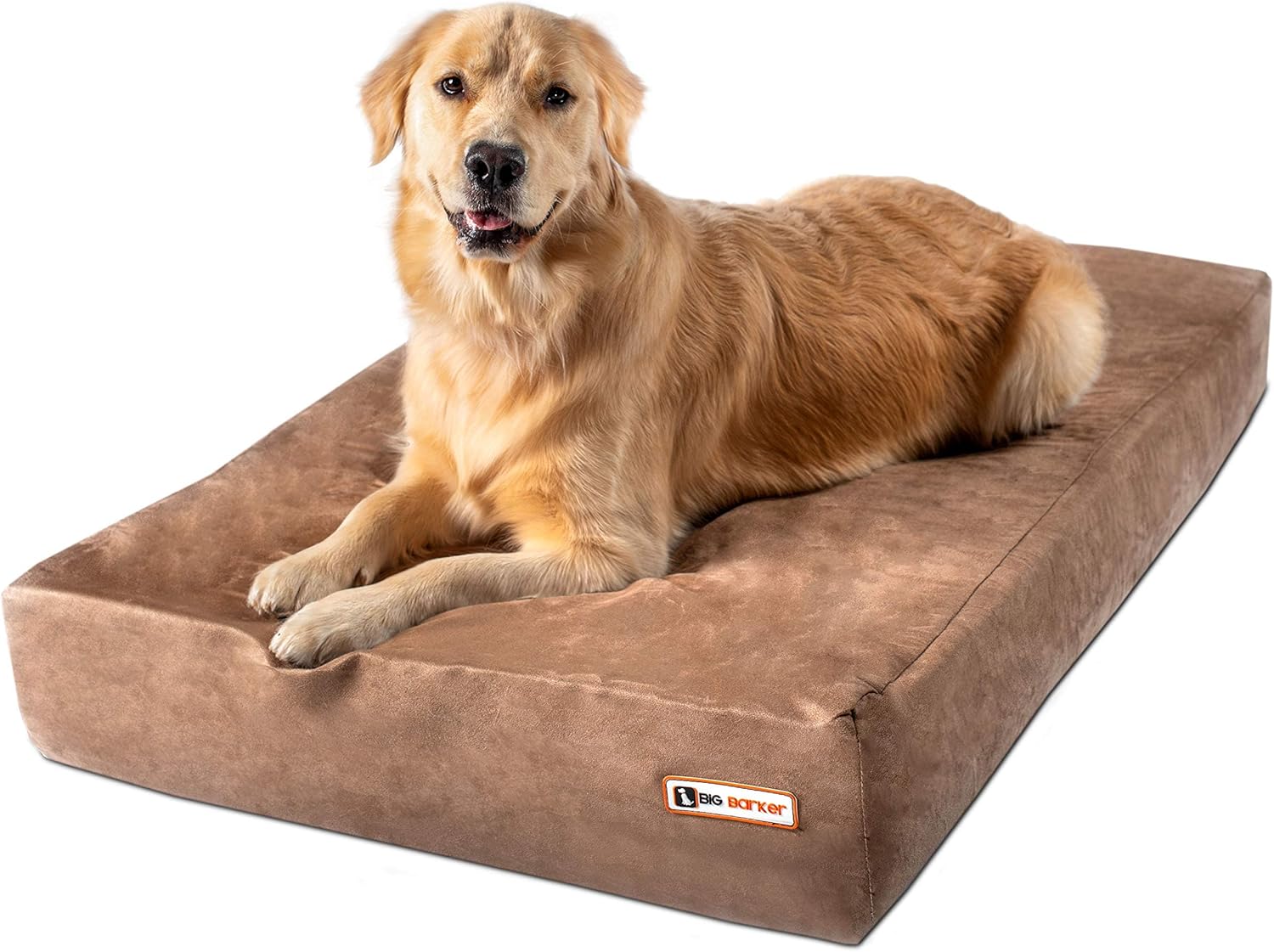
- Soft, padded bedding. A thick, supportive bed gives sore joints a comfortable place to rest. Our guide to orthopedic dog beds for senior dogs compares foam beds by size and support, and how to choose a dog bed explains how to measure your dog first.
- Raised food and water bowls. VCA suggests raising dishes to elbow height so your dog does not have to bend down as far.
- Non-skid floors. Rugs or runners with a grippy backing on slippery hardwood or tile help a dog keep its footing when getting up and turning.
- A ramp or step. A ramp or step for the car, the bed or the couch saves your dog from jumping up and down.
- Stick to the plan. Follow your vet’s feeding and medication advice. For older dogs, our list of senior dog food picks can help you talk through options with your vet when weight control is part of the plan.
Short, regular leash walks on softer ground, such as grass, usually fit this plan better than long runs or rough play. Ask your vet how much and what kind of exercise suits your dog.
Tools That Help
These items match the home changes VCA suggests above: supportive bedding for sore joints, plus a ramp or step so your dog can reach the couch or bed without jumping. Pick a bed sized to how your dog sleeps, and a ramp or step that matches the height of your furniture and your dog’s size. Ask your vet which changes suit your dog.
Pros
- 7 in of memory foam, with no bolsters
- Listed for dogs of 50 to 70 lb
- 10-year warranty against flattening
Cons
- No waterproof liner listed
- No lower-profile size

Pros
- Egg-crate foam base with memory foam on top
- Three padded sides
- Waterproof inner layer and washable cover
Cons
- Smallest bed here, so measure a big dog
- Front edge height not listed
Pros
- 4 height settings: 12, 16, 20 and 24 inches
- No-slip carpet surface, folds for storage
- Rated for pets up to 80 lb
Cons
- 40 in long, needs floor space in front of the couch or bed

Pros
- 13.5 in tall foam steps for couches and beds
- Removable cover, no assembly, 2.3 lb
Cons
- Made for small and medium pets; too low for tall beds
Frequently Asked Questions
Can arthritis in dogs be cured?
No. VCA explains that osteoarthritis cannot be cured, so treatment focuses on managing it. The aim of weight control, the right exercise, home changes and any medicine your vet prescribes is to keep your dog as comfortable and active as possible.
At what age do dogs get arthritis?
It can start earlier than many owners expect. VCA reports that OA affects at least 20% of dogs over one year old and 80% of dogs over eight. The AKC lists middle-aged to senior dogs as higher risk.
Can I give a dog human pain medicine for arthritis?
No, not without your vet. VCA warns against using medicine from your own cabinet, and the FDA asks owners to talk with a veterinarian before giving any anti-inflammatory drug, because a medicine made for people may hurt a dog.
Is walking good for a dog with arthritis?
Usually, yes, in the right form. ACVS recommends limiting high-impact activity in favor of leash walks, and Merck mentions exercise on soft surfaces. Your vet can tell you how long and how often to walk your dog.
Does weight really matter for arthritis?
Yes. VCA says excess weight and obesity are highly correlated with OA, ACVS calls weight control the most critical part of treatment, and the AKC notes that extra weight on damaged joints can speed up cartilage breakdown.
Conclusion
Stiffness after rest, limping, hesitating at stairs or jumps, slowing down and mood changes are the main dog arthritis symptoms to watch for. If you notice them, book a vet visit so your dog can be examined and a plan built around weight, exercise and any prescribed medicine. At home, soft bedding, raised bowls, non-skid floors and a ramp or step make every day easier.
Sources
- VCA Animal Hospitals: Arthritis in Dogs
- American College of Veterinary Surgeons: Osteoarthritis in Dogs
- Merck Veterinary Manual: Osteoarthritis (Degenerative Joint Disease)
- American Kennel Club: Osteoarthritis in Dogs: Signs, Symptoms, Treatments
- U.S. Food and Drug Administration: Get the Facts about Pain Relievers for Pets
About the author
William Foster covers guides for people welcoming a new puppy or kitten, including first-week checklists, puppy and kitten care basics, preparing the home and building safe routines. Guides draw on VCA Animal Hospitals, the ASPCA, the AKC and International Cat Care and list the questions new owners should discuss with their veterinarian. William Foster does not hold veterinary credentials.