
6 Best Senior Dog Food Picks for Small and Large Breeds
Senior dog foods compared by breed size and format, when a dog counts as senior, what changes with age and how to switch gradually.
 By Olivia Parker
Updated November 20, 2026
The best senior dog food is a complete and balanced adult maintenance diet that fits your dog’s size, chewing ability and body condition. There is no separate official “senior” standard: AAFCO lists growth, maintenance, gestation/lactation and all life stages as the recognized life stages, so foods sold for older dogs carry an adult maintenance statement. Because needs vary so much from dog to dog, your veterinarian is the best person to help you choose.
Below are six senior dog foods matched to specific needs: a standard dry formula, small breeds, large breeds, a mixed texture, a recipe without corn, wheat or soy, and a wet option for dogs that struggle with kibble.
Our Top Picks
Pros
- For adult dogs 7+ of any size
- AAFCO feeding-trial adult maintenance statement
- 352 kcal per cup listed by Hill's
Cons
- 5 lb bag
- Contains wheat and corn
Pros
- For small dogs 12+ up to 22 lb
- Kibble can be softened with water
- 308 kcal per cup (calculated)
Cons
- Aimed at dogs 12 and older only
- Formulated, not feeding-trial, statement

Pros
- Made for large breed senior dogs
- Real chicken is the first ingredient
- 30 lb bag
Cons
- Big bag goes stale once opened
- Page does not state AAFCO method

Pros
- Hard kibble mixed with tender shredded pieces
- AAFCO feeding-trial adult maintenance statement
- Real chicken is the first ingredient
Cons
- 34 lb bag is a lot for one small dog
- Still mostly hard kibble

Pros
- No corn, wheat or soy (listing)
- No poultry by-product meals (listing)
- Real chicken is the first ingredient
Cons
- Small 5 lb bag
- Check AAFCO statement on the bag

Pros
- Canned food for dogs that struggle with kibble
- For adult dogs 7+
- 12 cans of 13 oz
Cons
- Opened cans need refrigeration
- Uses cans fast for a large dog fed only wet
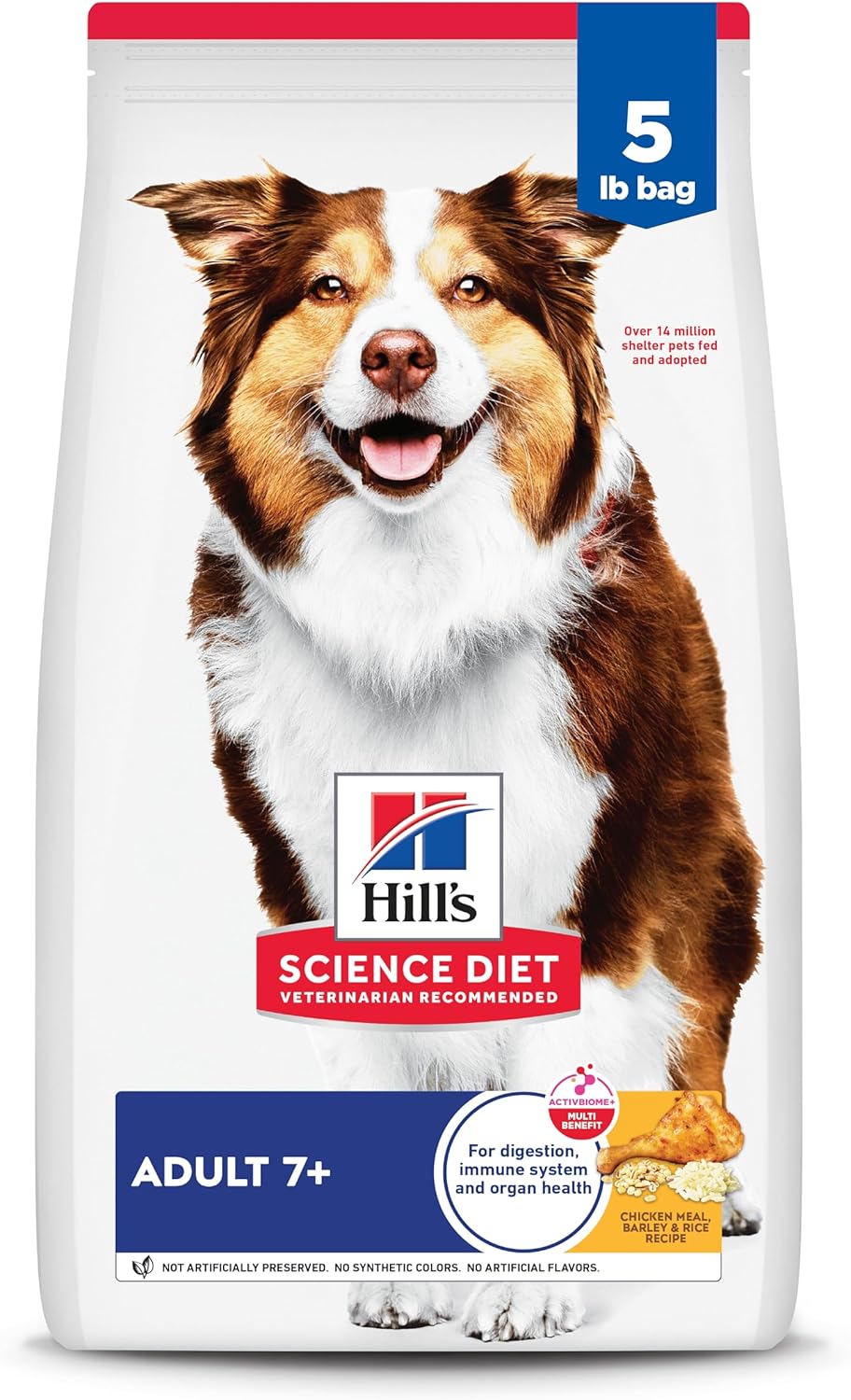
For most dogs 7 and older: Hill’s Science Diet Adult 7+
This is a straightforward dry senior dog food for healthy dogs of any size once they reach 7. Hill’s backs it with an AAFCO feeding-trial statement for adult maintenance, and its page gives a clear calorie figure, which makes portion control easier to plan with your vet.
- Recommended for adult dogs 7+ years of age; not for puppies or pregnant or nursing dogs (Hill’s)
- Animal feeding trials using AAFCO procedures support complete and balanced nutrition for maintenance of adult dogs
- First ingredients: chicken meal, cracked pearled barley, brewers rice, whole grain wheat, whole grain corn
- 352 kcal per cup
- The listing says it includes omega-6 fatty acids and vitamin E for skin and coat, plus a prebiotic fiber blend
Consider: This listing is a 5 lb bag, so a large dog will go through it quickly (bigger bags are sold separately). It contains wheat and corn, which only matters if your veterinarian has asked you to avoid them.
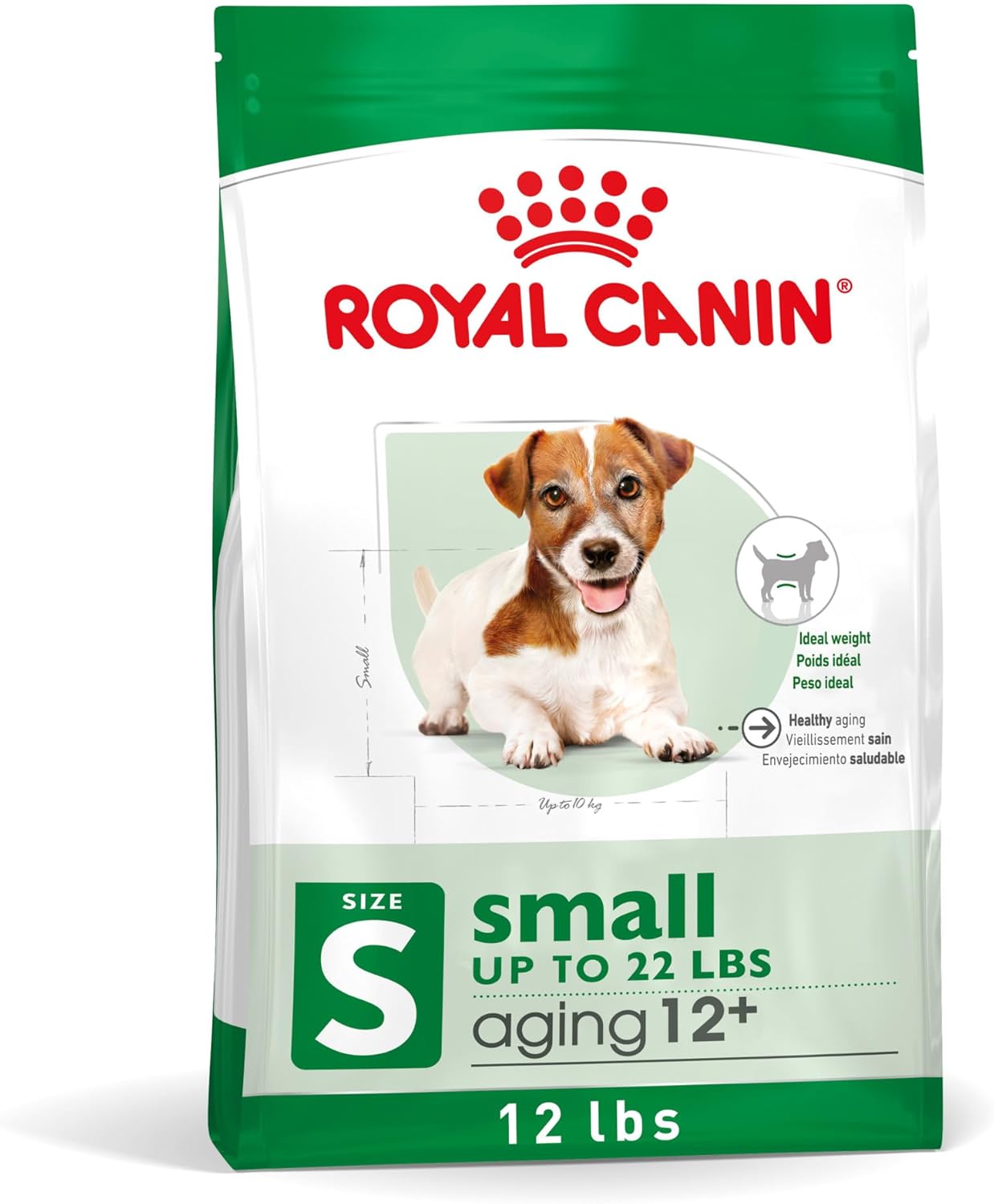
For small breeds: Royal Canin Small Aging 12+
Small seniors still need a food sized to their weight and a kibble they can manage. Royal Canin made this formula for small dogs over 12, and the kibble can be softened with water for dogs that find dry food harder to chew.
- For senior small breed dogs up to 22 lb, over 12 years old (Royal Canin)
- Formulated to meet the AAFCO Dog Food Nutrient Profiles for maintenance
- Kibble can be softened with water
- 308 kcal per cup (calculated)
- The listing says it includes EPA and DHA omega-3 fatty acids
Consider: It is aimed at dogs 12 and older, so a small dog of 8 to 11 may not need it yet. It is not meant for dogs over 22 lb, and its AAFCO statement is based on formulation rather than feeding trials.
For large breeds: IAMS Proactive Health Healthy Aging Large Breed
Large and giant dogs reach their senior years earlier than small dogs, so owners of big breeds often start looking at senior food sooner. This IAMS formula is made for large breed senior dogs and comes in a big bag suited to a big appetite.
- Formulated for large breed senior dogs; IAMS says it is complete and balanced for adult dogs (IAMS)
- Real chicken is the first ingredient
- IAMS suggests mixing it with your dog’s current food over 4 days when switching
- The listing says it includes DHA and an antioxidant blend with vitamin E and beta carotene
- 30 lb bag
Consider: A 30 lb bag takes a while to finish, and dry food goes stale once opened, so store it sealed. The IAMS page does not say whether its statement comes from feeding trials or formulation.
For dogs that like mixed textures: Purina Pro Plan Senior Shredded Blend Chicken & Rice
Some older dogs show more interest in a bowl with more than one texture. This Pro Plan formula combines hard kibble with tender shredded pieces and carries an AAFCO feeding-trial statement for adult maintenance.
- Animal feeding trials using AAFCO procedures support complete and balanced nutrition for maintenance of adult dogs (Purina)
- Hard kibble mixed with tender shredded pieces
- Real chicken is the number 1 ingredient
- The listing says it includes live probiotics, prebiotic fiber, EPA and glucosamine
- 34 lb bag, for all breed sizes
Consider: A 34 lb bag is a lot for one small dog. The food is still mostly hard kibble, so it does not solve chewing problems the way a wet food can.
Without corn, wheat or soy: Blue Buffalo Life Protection Senior
If you prefer a senior recipe without corn, wheat, soy or poultry by-product meal, this formula fits that preference. That is an ingredient choice, not a health requirement, so check with your vet if your dog has a diagnosed food issue.
- Real chicken is the first ingredient, with brown rice, barley and oatmeal (per the Amazon listing)
- No poultry by-product meals, no corn, wheat or soy, and no artificial flavors or preservatives (listing)
- The listing says it includes LifeSource Bits (a blend of antioxidants, vitamins and minerals), glucosamine and chondroitin, and prebiotic fiber
- Made for senior dogs 7+
- 5 lb bag
Consider: This listing is a small 5 lb bag. The AAFCO wording available online (maintenance) comes from label text shown by retailers, so check the statement printed on the bag.
For dogs that struggle with kibble: Hill’s Science Diet Adult 7+ Chicken & Barley Entrée
A canned food is an easy option for a senior who has trouble with dry kibble, needs more moisture, or eats better with a topper. This Hill’s entrée is made for dogs 7 and older and can also be mixed with dry food.
- Recommended for adult dogs 7+; formulated to meet the AAFCO Dog Food Nutrient Profiles for maintenance of adult dogs (Hill’s)
- First ingredients: water, chicken, cracked pearled barley, pork liver, whole grain corn
- 375 kcal per 13 oz can
- The listing says it includes antioxidants plus vitamins C and E
- 12 cans of 13 oz each
Consider: Opened cans need to be covered and refrigerated, and a large dog fed only wet food will use a 12-pack fast. The statement above comes from Hill’s Canadian page, so check the label on the can you buy.
Senior Dog Food Comparison
| Food | Form | Best for | AAFCO statement | Package |
|---|---|---|---|---|
| Hill’s Science Diet Adult 7+ | Dry | Most dogs 7+ | Adult maintenance, feeding trials | 5 lb bag |
| Royal Canin Small Aging 12+ | Dry, can be softened | Small dogs 12+, up to 22 lb | Maintenance, formulated | 12 lb bag |
| IAMS Healthy Aging Large Breed | Dry | Large breed seniors | Complete and balanced for adult dogs (per IAMS) | 30 lb bag |
| Purina Pro Plan Senior Shredded Blend | Dry kibble plus shredded pieces | Dogs that like mixed textures | Adult maintenance, feeding trials | 34 lb bag |
| Blue Buffalo Life Protection Senior | Dry | No corn, wheat or soy preference | Maintenance, formulated (retailer label text) | 5 lb bag |
| Hill’s Science Diet Adult 7+ Chicken & Barley Entrée | Wet | Dogs that struggle with kibble | Adult maintenance, formulated | 12 x 13 oz cans |
When Is a Dog a Senior?
There is no single age. VCA Animal Hospitals notes that giant breeds such as Great Danes are seniors at five or six, while small breeds may not be considered senior until 10 to 12. The AKC gives a similar range: small breeds sometime between 8 and 12, giant breeds as early as 6 or 7.
As a rough average, the AKC says seven years is often considered senior. That is why many senior dog foods are labeled “7+”, while some small-breed formulas start later.
What Changes in a Senior Dog’s Diet
VCA explains that there are no established nutrient requirements for senior dogs, so senior foods vary widely. Many older dogs need fewer calories as they slow down, and VCA notes that the feeding chart on a bag can overestimate how much to feed, so ask your vet for a target amount.
Protein still matters. The AKC says a healthy senior dog needs higher quality protein in its food than a younger adult. Weight is the easiest thing to watch at home: AAFCO notes that a pet gaining or losing weight is getting too much or too little food, and intake should be adjusted.
Teeth and chewing change too. VCA says periodontal disease is common in senior dogs and lists trouble chewing dry food as a reason to see your veterinarian. Softened kibble or a wet food can make meals easier while you sort out the cause with your vet. If you add a daily chew to home dental care, see VOHC-accepted dental chews for dogs.
How to Choose the Best Senior Dog Food
- Check the life stage statement. Look for “maintenance” or “adult maintenance” on the bag. VCA advises against “all life stages” products for healthy seniors because those diets are formulated to support growth.
- Match your dog’s size. Small-breed formulas are made for lighter dogs (Royal Canin Small Aging 12+ is for dogs up to 22 lb); large-breed formulas are made for big dogs that age sooner.
- Think about chewing. If your dog drops kibble or chews on one side, consider a softenable kibble or a wet food, and book a dental check.
- Watch calories, not just the label. Compare kcal per cup and use your vet’s target amount rather than the bag chart alone.
- Pick a bag size you will finish. A huge bag is practical for a large dog or several dogs; a small dog may do better with a smaller bag that stays fresh.
- Talk to your veterinarian first if your dog has kidney, heart, dental or weight concerns. Over-the-counter senior foods are not a substitute for a diet your vet prescribes.
A comfortable place to rest matters as much as the food bowl for many older dogs. If yours is getting stiff, see our guide to orthopedic dog beds for senior dogs.
Switching to Senior Food Gradually
Change foods slowly so your dog’s stomach can adjust. Hill’s recommends mixing increasing amounts of the new food with decreasing amounts of the old food over 7 days, and IAMS suggests a gradual mix over 4 days for its formula. Follow the instructions on the bag you buy.
- Start with mostly the old food and a small portion of the new food.
- Increase the new food a little each day while reducing the old food.
- Finish on the new food only, then keep an eye on your dog’s weight and stool.
If your dog has a sensitive stomach, take the switch even more slowly and ask your vet. Our list of dog foods for sensitive stomachs covers formulas made for that need.
Frequently Asked Questions
Do senior dogs need senior dog food?
Not always. There is no separate AAFCO senior profile, and senior foods are adult maintenance diets designed around common aging changes. Ask your veterinarian whether your dog’s current adult food still fits, especially if weight or health has changed.
At what age should a dog switch to senior food?
It depends on size. VCA says giant breeds are seniors at about five or six, while small breeds may be considered senior at 10 to 12. Many senior formulas are labeled 7+, and your vet can tell you when a change makes sense.
Is wet food better for older dogs?
Wet food can help a senior that struggles to chew dry kibble or eats better with more moisture. It is not automatically better for every dog. If your dog has trouble chewing, VCA lists that as a reason to see your veterinarian.
How much should I feed a senior dog?
Start with the feeding guide on the label, then adjust to keep your dog at a healthy weight. VCA notes that bag charts can overestimate, so ask your veterinarian for a target amount and recheck weight regularly.
Can senior dog food help joints or the brain?
Some listings say their formulas include ingredients such as glucosamine or DHA, but a food label is not a medical treatment. If your dog is stiff or seems confused, talk to your veterinarian before relying on food or adding supplements.
Conclusion
For most healthy dogs 7 and older, Hill’s Science Diet Adult 7+ is a simple dry option with a feeding-trial maintenance statement. Choose Royal Canin Small Aging 12+ for small dogs over 12, IAMS Healthy Aging Large Breed for big seniors, and Purina Pro Plan Senior Shredded Blend for a mixed texture. Blue Buffalo Life Protection Senior suits owners avoiding corn, wheat and soy, and the Hill’s Adult 7+ canned entrée helps dogs that struggle with kibble. Switch gradually and check with your veterinarian about the right amount.
Sources
- AAFCO: Selecting the Right Pet Food
- VCA Animal Hospitals: Feeding Mature and Senior Dogs
- VCA Animal Hospitals: Senior Dog Care, Special Considerations
- American Kennel Club: Senior Dog Nutrition and Supplement Tips
- American Kennel Club: How Do You Know When Your Dog Is a Senior?
- Hill’s Pet Nutrition: Adult 7+ Chicken Meal, Barley & Rice Recipe
- Hill’s Pet Nutrition: Adult 7+ Chicken & Barley Entrée
- Royal Canin: Small Aging 12+
- IAMS: Healthy Aging Large Breed
- Purina: Pro Plan Adult 7+ Shredded Blend Chicken & Rice Formula
About the author
Olivia Parker covers cat litter types, litter box habits and common litter problems, plus food choices and feeding routines for dogs and cats. Guides draw on sources such as the ASPCA, the Cornell Feline Health Center and veterinary hospital guidance, and recommend talking to a veterinarian before changing a pet's diet or when litter habits suddenly change. Olivia Parker does not hold veterinary or nutrition credentials.