
8 Best Hairball Remedies for Cats: Food, Treats, Gel and a Brush
Cat hairball remedies compared: brushing, hairball control foods, a fiber treat and a lubricant gel, plus the signs that a hairball needs a vet.
 By Daniel Mitchell
Updated November 28, 2026

The best hairball remedy for most cats starts with a brush, not a product in a bowl. Frequent brushing removes loose fur so your cat swallows less of it, according to the Merck Veterinary Manual, and the same source notes that some commercial foods and treats are made to help prevent hairballs, with lubricant products as another option. If your cat retches without bringing anything up, stops eating, seems lethargic or is constipated, skip the remedies and call your veterinarian, because a hairball can block the intestines.
Below are eight picks from seven brands, each matched to a different need: four hairball control dry foods, one combined urinary and hairball food, a lubricant gel, a fiber treat and a self-cleaning brush. Start with our cat grooming tips if you have never set up a brushing routine, and talk to your vet before changing your cat’s food or starting a gel.
Our Top Picks
- For every cat, the first step: YiEFUR Self-Cleaning Cat Brush
- For an everyday adult hairball food: Purina ONE +PLUS Hairball Formula
- For cats prone to hairballs, with a matching wet food: Royal Canin Hairball Care
- For a recipe without corn, wheat, soy or by-product meal: Blue Buffalo Tastefuls Hairball Control
- For senior cats 7 and older: Hill’s Science Diet Adult 7+ Hairball Control
- For hairball plus urinary support in one food: Hill’s Science Diet Adult Urinary & Hairball Control
- For occasional hairballs without a food change: Tomlyn Laxatone Hairball Gel
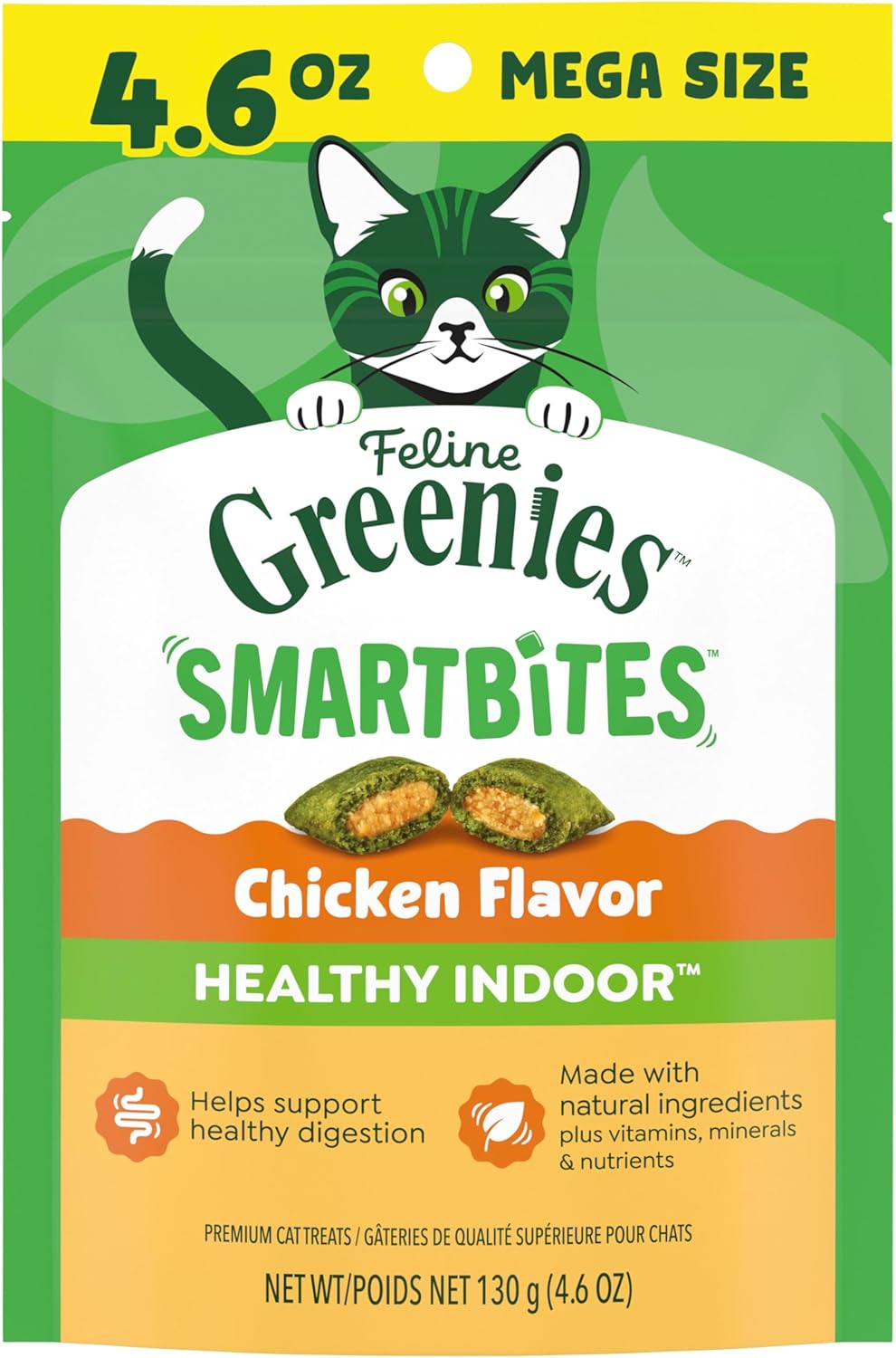
- For a low-calorie fiber treat: Greenies Feline Smartbites Healthy Indoor
Specs below come from each product’s Amazon listing. Hairball and health statements are the brands’ own claims and are attributed to them. None of these products is a treatment for a blockage.
| Product | Type | Life stage (per listing) | How it is meant to help (per brand) | Best used when |
|---|---|---|---|---|
| YiEFUR Self-Cleaning Brush | Grooming brush | All cats, long or short hair | Removes loose fur before it is swallowed | Daily or regular grooming |
| Purina ONE +PLUS Hairball Formula | Dry food | Adult | Natural fiber-rich blend | Healthy adult with occasional hairballs |
| Royal Canin Hairball Care | Dry food | Adult, 1 year and older | Dietary fiber blend that helps move hair through the gut | Cats prone to hairballs |
| Blue Buffalo Tastefuls Hairball Control | Dry food | Adult | 3-fiber blend with psyllium and cellulose | Owners avoiding corn, wheat and soy |
| Hill’s Science Diet Adult 7+ Hairball Control | Dry food | Senior, 7 and older | Natural fiber | Older cats that groom a lot |
| Hill’s Science Diet Urinary & Hairball Control | Dry food | Adult, 1 to 6 | Natural fiber, plus urinary mineral support | One over-the-counter food for both goals |
| Tomlyn Laxatone | Lubricant gel | Short- and long-haired cats | Lubricates swallowed hair so it can pass | Occasional hairballs, with your vet’s OK |
| Greenies Smartbites Healthy Indoor | Treat | Adult | Fiberblend formula for digestion | Adding fiber without switching food |
Affiliate disclosure: As an Amazon Associate I earn from qualifying purchases. Links to Amazon in this article are affiliate links. Learn more.
Pros
- For long- and short-haired cats
- Soft-tip bristles for small tangles
- Push-button fur release
Cons
- No bristle length listed
- Long coats still need a comb

Pros
- Real chicken is the #1 ingredient
- Natural fiber-rich blend
- No artificial flavors or preservatives
Cons
- Adult cats only
- Switch over 7 to 10 days

Pros
- For cats 1 year+ prone to hairballs
- Fiber blend with psyllium and beet pulp
- Matching wet food in the line
Cons
- Wet food sold separately
- Contains chicken by-product meal

Pros
- 3-fiber blend with psyllium
- No corn, wheat, soy or by-product meal
- Omega-3 and 6 for skin and coat
Cons
- Contains grains (brown rice)
- Adult dry formula only

Pros
- Made for cats 7 and older
- Natural fiber for hairballs
- Omega-3 and 6 plus taurine
Cons
- Senior formula only
- Listing name varies, check the bag

Pros
- Natural fiber for hairballs
- Urinary mineral support (brand)
- Over-the-counter adult food
Cons
- Ages 1 to 6 only
- Not a prescription urinary diet

Pros
- Lubricates swallowed hair
- Tuna flavor, 4.25 oz
- Given on paw or nose
Cons
- Laxative type, ask your vet first
- Does not reduce hair swallowed
Pros
- Fiberblend formula for digestion
- Under 2 calories per treat
- Crunchy outside, soft inside
Cons
- A treat, not a complete diet
- Main claim is digestion support
For every cat, the first step: YiEFUR Self-Cleaning Cat Brush
Cornell, Merck and the ASPCA all point to brushing as a basic way to reduce hairballs, so a good brush belongs in every hairball plan. The Cornell Feline Health Center suggests brushing and combing your cat’s coat daily, and this brush makes the daily part easier because one button pushes the collected fur off the bristles.
- Made for long-haired and short-haired cats
- Soft-tip bristles that the brand says help break up small tangles and mats
- Push-button release clears fur from the bristles
- Soft gel handle with an anti-skid curve
Consider: The listing gives no bristle length, and long coats still need a comb to work out mats. Our guide to the best cat brushes for short hair, long hair and shedding covers combs and deshedding tools.
For an everyday adult hairball food: Purina ONE +PLUS Hairball Formula
This is the simple choice for a healthy adult cat that brings up a hairball now and then and already eats dry food. Purina says a natural fiber-rich blend helps minimize hairballs, and the formula is complete and balanced for adult cats, so it can replace a regular adult dry food.
- Real chicken is the number 1 ingredient; brand lists 38 g of protein per cup
- Natural fiber-rich blend that the brand says helps control hairballs
- Four antioxidant sources; no artificial flavors or preservatives
- Bag sizes from 3.5 to 22 lb (this listing: 7 lb)
Consider: Purina says it is for adult cats only; kittens and pregnant or nursing cats need a kitten formula. The brand recommends 7 to 10 days to switch from your cat’s current food.
For cats prone to hairballs, with a matching wet food: Royal Canin Hairball Care
Royal Canin built this formula for cats 1 year and older that are prone to hairballs. The brand says its blend of dietary fibers helps the gut pass swallowed hair in the stool instead of letting it build up in the stomach, and it suggests pairing the kibble with its Hairball Care wet food for mixed feeding.
- For adult cats 1 year and older prone to hairballs
- Dietary fiber blend; listed ingredients include psyllium seed husk and beet pulp
- Brand says it is designed for healthy cats that need extra hairball help
- Bag sizes of 3, 6 and 14 lb (this listing: 6 lb)
Consider: The matching wet food is sold separately, and the listing’s ingredients include chicken by-product meal, so check the bag if you avoid by-products.
For a recipe without corn, wheat, soy or by-product meal: Blue Buffalo Tastefuls Hairball Control
Choose this one if ingredient lists matter to you. Blue Buffalo says the recipe has no poultry by-product meals, no corn, wheat or soy and no artificial flavors or preservatives, and it uses a 3-fiber blend with psyllium seed husks and cellulose for hairball control.
- Real chicken is the number 1 ingredient, with brown rice
- 3-fiber blend including psyllium seed husks and cellulose (brand)
- Omega-3 and omega-6 fatty acids for skin and coat (brand)
- Formulated to meet AAFCO nutrient profiles for adult cats
Consider: It contains grains such as brown rice, so it is not a grain-free food. It is an adult dry formula only.
For senior cats 7 and older: Hill’s Science Diet Adult 7+ Hairball Control
Older cats tend to have more hairballs than kittens and young cats because they spend more time grooming, according to Cornell. This Hill’s formula is made for mature cats 7 and older, with natural fiber that the brand says helps reduce hairballs.
- Senior formula for cats 7 and older, chicken recipe
- Natural fiber for hairball control (brand)
- Omega-3 and omega-6 fatty acids for skin and fur, plus taurine
- No artificial colors, flavors, preservatives or chicken by-product meal (brand)
Consider: Listings call it both “Adult 7+” and “Senior Adult 7+”, so check the bag. An older cat that is losing weight or vomiting needs a vet visit before any food change; our senior cat care guide explains what to watch for with age.
For hairball plus urinary support in one food: Hill’s Science Diet Adult Urinary & Hairball Control
This over-the-counter Science Diet recipe is for adult cats whose owners want one food that covers both hairballs and urinary support. Hill’s says it supports a healthy mineral content in the urine and has natural fiber to help reduce hairballs and support digestion.
- For adult cats 1 to 6 years old, chicken recipe
- Natural fiber for hairballs and digestion (brand)
- Urinary support through urine mineral content (brand)
- 7 lb bag
Consider: It is not a prescription urinary diet. A cat that strains in the litter box, has blood in the urine or pees outside the box needs a veterinarian, not a food swap.
For occasional hairballs without a food change: Tomlyn Laxatone Hairball Gel
A lubricant gel suits a cat that only has a hairball now and then, or a cat you cannot switch to a new food. PetMD veterinarian Jennifer Coates lists hairball gels like Laxatone among the over-the-counter options for infrequent hairballs. Tomlyn says the tuna-flavored gel lubricates swallowed hair so it can pass through the digestive system.
- Tuna-flavored gel, 4.25 oz tube; other flavors such as catnip are sold separately
- Brand says it lubricates swallowed hair to help it pass
- Contains omega-3, -6 and -9 fatty acids (brand)
- Brand suggests placing a small amount on the cat’s paw or nose; for short- and long-haired cats
Consider: Hairball gels are usually mild laxatives, and Cornell advises never giving a cat a laxative without your veterinarian’s approval. Follow the label and ask your vet how often to use it. A gel also does nothing to cut down the hair your cat swallows.
For a low-calorie fiber treat: Greenies Feline Smartbites Healthy Indoor
If your cat is doing fine on its current food, a fiber treat is the gentlest way to add a little support. Greenies says the treats use its Fiberblend formula to support healthy digestion, the listing names hairball control as the intended use, and each treat has less than 2 calories, according to the brand.
- Greenies Fiberblend formula for digestion (brand)
- Less than 2 calories per treat (brand)
- Crunchy outside, soft inside; chicken flavor (tuna also sold)
- For adult cats; small enough for treat-dispensing toys (brand)
Consider: This is a treat, not a complete diet, and its main claim is digestive support. Count treats as part of your cat’s daily food; our best cat treats guide covers how to fit treats into a routine.
Why Cats Get Hairballs
Hairballs come from a normal, clean habit. Tiny backward-facing barbs on a cat’s tongue pull loose hair down the throat as the cat grooms, and hair is made of keratin, which cats cannot digest. Most of it passes out in the stool, but some stays in the stomach and slowly builds into a damp clump, Cornell explains. Despite the name, a spit-up hairball is usually long and narrow, not round.
Some cats are more at risk. Long-haired breeds such as Persians and Maine Coons face higher risk than short-haired cats, and hairballs are more common in shedding season. Cats with gastrointestinal disease, allergies or skin disease, or cats that over-groom because of stress or pain, are also more prone to hairballs, according to VCA Animal Hospitals. That is why frequent hairballs are worth a vet visit even if your cat seems fine.
When a Hairball Is an Emergency
An occasional hairball is normal. Cornell says it is not uncommon for a cat to bring one up every week or two, while PetMD notes that a cat with a hairball about once a month usually does not need a full workup. Hairballs more often than that, or alongside other symptoms, call for veterinary care.
Call your veterinarian right away if you see any of these signs:
- Repeated retching or vomiting with nothing coming up
- Trying to vomit two or three times in a day, or vomiting that lasts more than a day or two (PetMD)
- Lethargy or refusing food for more than a day or so
- Belly pain or no bowel movements (VCA)
- Not keeping down food or water
- Poor appetite, weight loss, diarrhea or constipation with hairballs
A hairball lodged in the intestine is uncommon but very serious, and it can need surgery. A cat with a blockage may not have any hair in its vomit, VCA notes. What sounds like hacking up a hairball can also be a breathing problem such as asthma, so do not assume. Our guide to signs your cat is sick lists other changes to watch for.
How to Choose a Hairball Remedy
- Start with brushing. A brush helps every cat and has no diet change. Add a food, treat or gel only if hairballs keep coming.
- Long-haired cats: Brush or comb daily. If your cat will not allow it, Cornell suggests a haircut from your vet or a reputable groomer once or twice a year.
- Senior cats: Older cats groom more, so a senior hairball formula such as the Hill’s 7+ makes sense, but new or more frequent vomiting in an older cat should be checked first.
- Overweight cats: Pick low-calorie treats and keep meal portions steady. Our cat obesity guide explains how to tell if your cat is carrying extra weight.
- Wet or dry: PetMD notes that hairball control foods come in both wet and dry forms. All five foods here are dry, and Royal Canin sells a matching wet version. See wet vs dry cat food for the trade-offs.
- Life stage: Match the food to your cat’s age on the bag. Most hairball formulas here are for adults, not kittens.
Any hairball food should be introduced gradually, and Cornell advises talking to your veterinarian before relying on a diet or a laxative to prevent or clear a hairball. Never give cooking oil, butter or grease, and do not give mineral oil on your own: PetMD warns that mineral oil is very dangerous if inhaled, which can happen when a cat vomits.
How to Reduce Hairballs at Home
- Brush on a schedule. Regular brushing keeps the coat clean, cuts shedding and reduces hairballs, according to the ASPCA.
- Comb long coats. Cornell recommends brushing and combing, so follow the brush with a comb on long-haired cats.
- Brush more in shedding season. Hairballs are more frequent when cats shed their coats, so step up grooming then.
- Pick up small items. Cornell suggests keeping floors free of thread, paper clips and twist ties, which can end up inside a hairball if swallowed.
- Watch for over-grooming. Excessive licking can point to a skin problem, allergy or stress. If your cat still has hairballs despite regular brushing, the ASPCA suggests asking your vet to recommend a solution.
Frequently Asked Questions
What is the best hairball remedy for cats?
Regular brushing is the first step because it reduces the hair your cat swallows. If hairballs continue, a hairball control food, a fiber treat or a lubricant gel can help some cats, but ask your veterinarian before starting a gel or changing food.
Is it normal for a cat to throw up hairballs?
An occasional hairball is normal. Cornell says bringing one up every week or two is not unusual. Hairballs more often than about once a month, or with other symptoms, are worth a vet visit.
Do hairball control cat foods work?
These foods use added fiber that is meant to move hair through the digestive tract, and VCA suggests asking your vet whether a hairball diet suits your cat. Results vary, and they do not replace brushing or a vet check for frequent hairballs.
Are hairball gels safe for cats?
Hairball gels are usually mild laxatives. Cornell advises never giving a laxative without your veterinarian’s approval, so check with your vet and follow the label.
When should I worry about a cat’s hairball?
Call your vet if your cat retches without bringing anything up, vomits repeatedly, stops eating, seems lethargic, has belly pain or is not passing stool. These can be signs of a blockage or another illness.
Can I give a cat olive oil or butter for hairballs?
No. PetMD says not to give cooking oils, butter, lard or grease, and not to give mineral oil on your own because it is very dangerous if inhaled.
Conclusion
Start with the YiEFUR brush and a regular grooming routine for any cat. For a healthy adult with occasional hairballs, Purina ONE +PLUS Hairball Formula is the everyday pick, Royal Canin Hairball Care suits cats prone to hairballs, and Blue Buffalo Tastefuls fits owners avoiding corn, wheat and soy. Choose Hill’s Adult 7+ for seniors or Hill’s Urinary & Hairball for adults that need both kinds of support. Use Laxatone gel or Greenies treats when you would rather not switch food, and see your veterinarian first if hairballs are frequent or your cat seems unwell.
Sources
- Cornell Feline Health Center: The Danger of Hairballs
- Cornell Feline Health Center: A Hairy Dilemma
- VCA Animal Hospitals: Trichobezoars (Hairballs) in Cats
- Merck Veterinary Manual: Managing Hairballs in Cats
- PetMD: Cat Hairballs 101: How to Help
- ASPCA: General Cat Care
- ASPCA: Cat Grooming Tips
About the author
Daniel Mitchell covers grooming and coat care, including bathing, brushing, nail trimming and grooming tools, plus pet hair removal and washing pet beds and gear. Guides follow product care labels and manufacturer instructions and recommend a professional groomer or veterinarian when a pet needs specialist handling. Daniel Mitchell does not hold veterinary or professional grooming credentials.