
How to Get Your Dog Used to a Harness
Start with a snug, correct fit, then introduce the harness in short, rewarded steps. Learn how to get a dog or puppy used to a harness and leash.
 By James Anderson
Updated November 10, 2026

The best way to get a dog used to a harness is to start with a correct fit, then introduce the gear in short steps that end with a treat. Let your dog sniff it, reward calm behavior, and build up from a few seconds of wearing it. Add the leash only after the harness itself feels normal. If you are still deciding between gear types, see our comparison of a dog harness vs a collar.
Start with the right fit
A harness that pinches, shifts or rubs makes every later step harder. Before you start, measure your dog and choose a size with some adjustment range. Our guide on how to measure your dog for a harness walks through it.
Put the harness on when your dog is calm, and aim for “snug, but not too tight,” according to the AKC. You should be able to fit two fingers under every strap. If a buckle will not reach, loosen the straps rather than forcing it. After fastening, gently pull the harness toward your dog’s head to check that it cannot slip off.
The AKC also offers a few placement checks:
- The neck opening should be adjustable and sit near the top of the breastbone, not around the throat.
- The chest strap should not sit behind the rib cage or pinch the front legs.
- Your dog should be able to reach the front legs forward and out to the side without the harness getting in the way.
Step-by-step introduction
There is no set timeline, so let your dog set the pace. Move to the next step only when your dog is relaxed and eagerly taking treats. Keep each session short and end on a good note.
- Present the harness and watch. PetMD’s trainer advises showing the gear and observing your dog’s reaction. If your dog hesitates or backs away, they may need more time to get comfortable with it.
- Pair it with treats. Offer yummy treats while the harness is in view. If your dog moves their head toward the opening while you hold it, feed a few treats. Never trick your dog by luring them closer with a treat so you can restrain and harness them.
- Keep the exposure small. Veterinary behaviorists writing for VCA describe desensitization and counterconditioning as gradual, systematic exposure paired with something positive, starting at a very low intensity. They say to stop a session if your pet shows signs of fear. Another sign you are moving too fast is that your pet no longer readily takes treats.
- Put it on for a few seconds. Teach your dog to stand still, then guide one paw through and then the other, as a trainer quoted by PetMD describes. If your dog wiggles, feed treats while you work. Look for a harness that is easy to fasten and does not rub under the front legs.
- Fasten, reward, and take it off. Keep the first sessions very brief: buckle it, treat, and remove it before your dog gets uneasy.
- Build up wearing time. Instead of heading straight out for a walk, have your dog wear the harness for short periods while eating treats or playing, which is also from PetMD. Slowly lengthen the time indoors as your dog stays relaxed.
Puppies
Training can begin early. One trainer quoted by the AKC says, “We start leash training before we even take a walk,” which means getting a puppy comfortable with the harness and an attached leash, with rewards, before any outing. The AKC article adds that harnesses are generally a better choice for puppies because they avoid pressure on the neck. The fit should be snug enough that the puppy cannot back out, but not so tight that it restricts movement.
There is no set age or number of days for this, so follow your puppy’s comfort. Puppies grow, so recheck the fit with the two-finger test as your puppy changes size. The same AKC article suggests finding a trainer early rather than waiting until you are frustrated, and mentions a puppy class such as AKC S.T.A.R. Puppy or a basic class. Our new puppy checklist covers the rest of the supplies to gather.
Adding the leash
Once your dog is happy wearing the harness, clip on a leash and repeat the same easy, rewarded steps. Start in a quiet spot indoors. The AKC trainer suggests marking with a word like “yes” (or a clicker) and giving a treat when your puppy looks at you while the leash is attached. Head outside only after your dog understands walking on a loose leash inside the house or yard, according to the AKC.
The same article prefers a lightweight 6 ft leash over a retractable one. If your dog chews the leash, teach “drop” and reward the release. Our guide to types of dog leashes compares the options. If your dog already pulls hard, you may also want to look at no-pull dog harnesses, and pair any gear with patient practice.
Signs the harness doesn’t fit
Stop and adjust or resize if you see any of these signs, which the AKC lists in its guide to a well-fitting harness:
- The harness is rubbing your dog’s skin, and in worse cases, fur and skin are rubbed raw.
- Your dog slips out of it easily.
- Your dog shows odd movement patterns.
- You cannot fit two fingers under the straps, or the harness squeezes your dog when they stand or sit.
If you notice irritated skin or your dog’s movement seems off, talk to your veterinarian.
When to get help
Some hesitation is normal. Reluctance can look like pausing, running off, or hiding when the harness appears, and some dogs grab, bite or tug at it to avoid being harnessed. PetMD’s trainer says that extreme responses such as running, hiding, shaking or growling are a cue to find a professional trainer. If your dog is too distracted to work or keeps avoiding the training, a certified behavior consultant can help.
VCA’s behaviorists say that if you are not making progress, you should pause and ask a behavior professional for help. If your dog’s reaction seems sudden or linked to discomfort, talk to your veterinarian.
Harnesses to Start With
These are the harnesses we cover. Pick one that fits well before you start the steps above. For more detail on each pick, see our guide to the best no-pull dog harnesses.

Pros
- Front and back rings plus a back handle
- 4 adjustment points
- Reflective strips
Cons
- No girth chart on the product page
- Sizes stop at XL

Pros
- Front chest clip with a martingale loop
- 4 adjustment points
- Widest size range here, from 12 to 49 in girth
Cons
- No padding listed by the maker
- Eight overlapping sizes, so read the ranges carefully
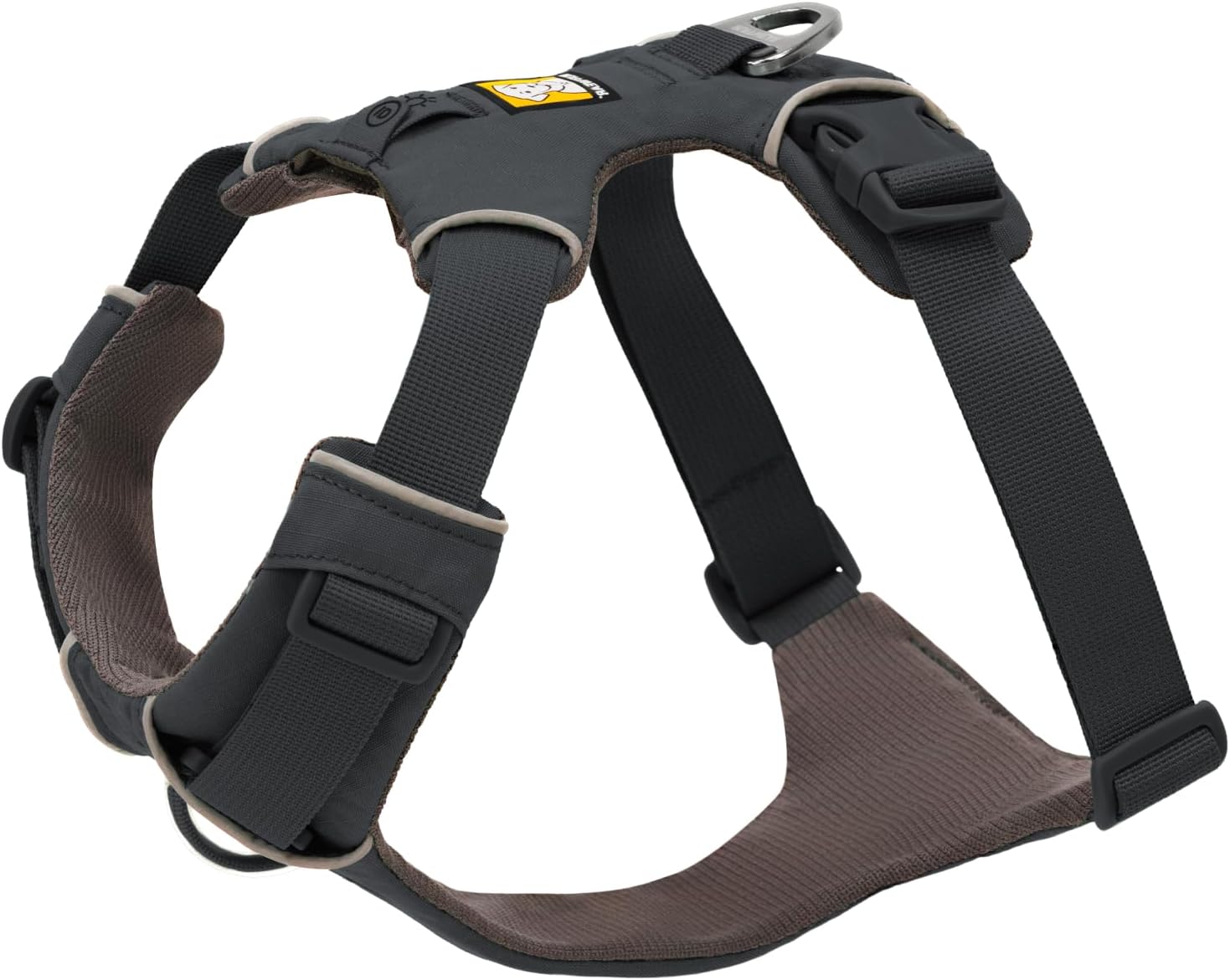
Pros
- Padded, per Ruffwear
- Front and back attachment points
- Maker publishes a fit guide
Cons
- Largest size stops at 42 in girth
- L/XL spans a 10 in girth range, so check the fit
Pros
- Front and back clips
- 5 adjustment points and a padded chest
- 10 in seat belt loop
Cons
- Not crash reviewed, per Kurgo
- Do not treat the seat belt loop as crash protection
- Link opens one size, so confirm yours before ordering
Frequently Asked Questions
How long does it take to get a dog used to a harness?
There is no set timeline, and it varies by dog. Move forward only when your dog is calm and taking treats, and go back a step if they stop.
Should I use treats?
Yes. Pairing the harness with treats helps your dog link it with something good, and feeding treats while you fasten it can help a wiggly dog hold still.
What if my dog backs away from the harness?
Slow down. Go back to letting your dog look at and sniff the harness while you give treats, and avoid luring your dog closer in order to restrain them. If your dog shows extreme responses like running, hiding, shaking or growling, contact a professional trainer.
Is a harness better than a collar for a puppy?
A trainer quoted by the AKC says harnesses are generally better for puppies because they avoid neck pressure. The fit still matters, so check it regularly. Ask your veterinarian if you have concerns about your puppy’s neck or body.
When should I attach the leash?
Add it once your dog is comfortable wearing the harness. Practice indoors first, and go outside only after your dog walks on a loose leash in the house or yard.
Sources
- PetMD, How to Leash Train a Dog
- PetMD, How to Properly Put On a Dog Harness
- VCA Animal Hospitals, Introduction to Desensitization and Counterconditioning
- American Kennel Club, How to Teach a Puppy to Walk on a Leash
- American Kennel Club, How to Put On a Dog Harness
- American Kennel Club, The Importance of a Well-Fitting Harness
About the author
James Anderson writes easy-to-follow articles about everyday dog care, with a focus on harnesses, collars, leashes and calmer daily walks. His content is general educational information and is not a substitute for advice from a veterinarian or qualified behavior professional.