
6 Best Dog Leashes for Walking, Training and Running
Compare six dog leashes by use, from everyday 6 ft nylon to hands-free running and long lines, plus leash length, harness pairing and retractable risks.
 By James Anderson
Updated November 11, 2026

For most dogs, the best dog leash is a 6 ft nylon leash with a padded handle and a sturdy metal clip. Trainers suggest starting with a nylon leash of 4 to 6 ft, according to the AKC, and that length handles most daily walks. The picks below also cover large and strong dogs, small dogs, running, and recall training.
One caution before you shop: no leash stops pulling. A leash can give you a better grip, but pulling changes through training and a well-fitted harness. If pulling is a constant struggle, a professional trainer can help. If you want to start practicing at home, see how to stop a dog from pulling on the leash.
Dog Leashes Compared
All specs in this table and in the picks are as stated in each Amazon listing. This guide has not independently measured them, so check the listing for your size and color before you order.
| Product | Type | Length (per listing) | Width (per listing) | Handle(s) | Clip (per listing) |
|---|---|---|---|---|---|
| PenSeepet Padded Handle (1 in version) | Standard | 6 ft | 1 in | One handle, soft padding inside the grip | 360-degree metal clasp, plus metal D-ring |
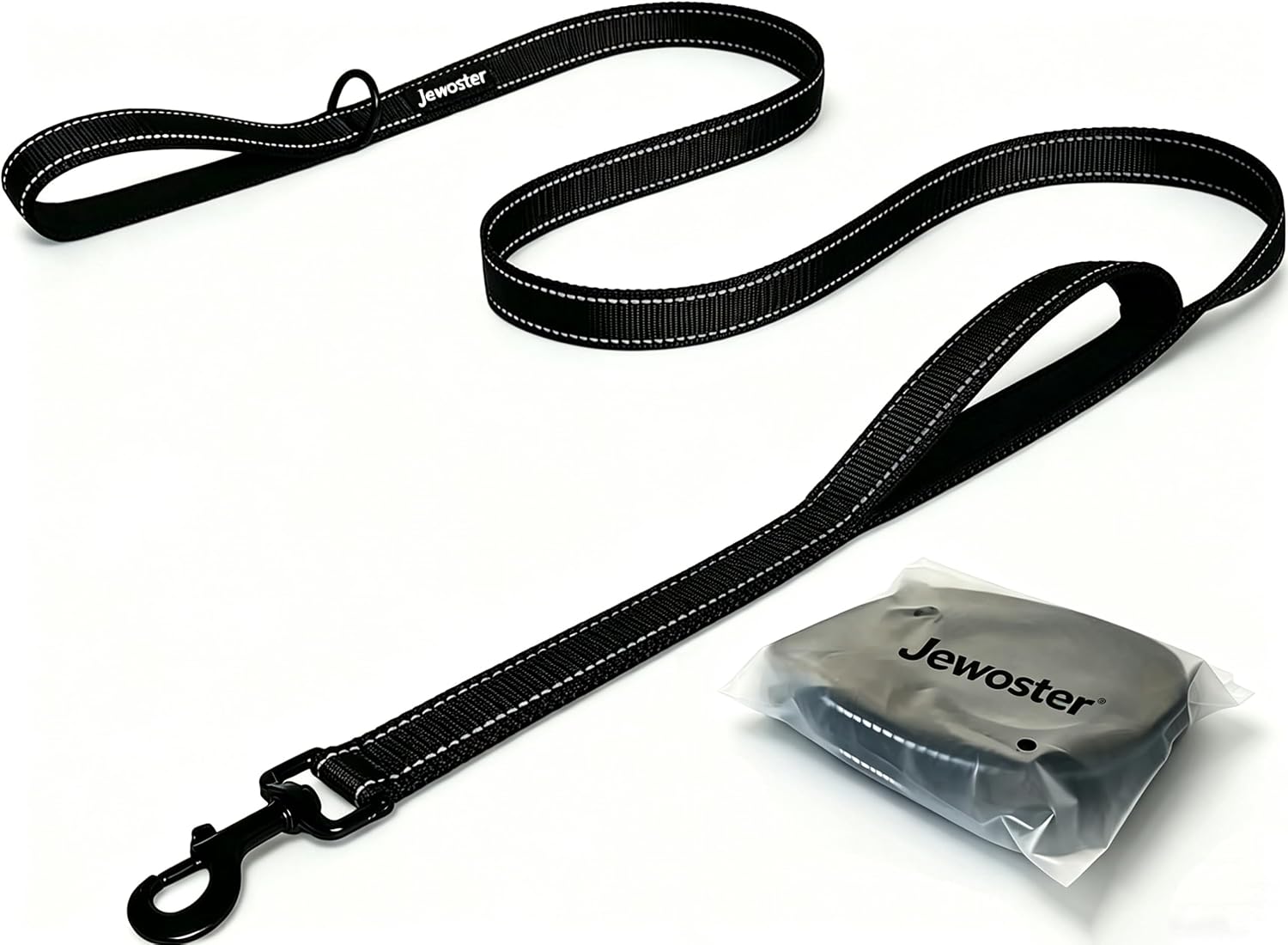
| JEWOSTER Heavy Duty, 2 Handles | Standard, two handles | 6 ft (72.1 in) | 1 in | Padded neoprene main handle plus traffic handle near the clip | 360-degree swivel, heavy-duty metal clip |
| PetSafe Nylon (3/8 in) | Standard, light | 6 ft (72 in) | 3/8 in | One handle, no padding | Bolt snap hook |
| Ruffwear Front Range | Standard with locking clip | 5 ft (60 in) | 0.75 in | Padded handle plus traffic handle | Locking swivel Crux Clip |
| Tuff Mutt Hands Free | Hands-free waist leash | 48 in leash, bungee section stretches to 4 to 5 ft | Belt 1 in wide, adjusts 26 to 48 in | Hip handle plus handle near the collar | Carabiner clip |
| Qiaosite Waterproof Long Leash | Long line | 30 ft (360 in) | 0.6 in | Not specified in the listing | Snap hook |
Our Top Picks
Pros
- Standard 6 ft nylon leash
- Soft padding inside the handle grip
- Reflective, with a 360-degree metal clasp
Cons
- Single handle, no traffic handle
- Pick the width that matches your dog
Pros
- Padded neoprene handle plus traffic handle
- 1 in wide, 3 mm thick nylon webbing
- Swivel clasp, reflective threading, D-ring
Cons
- Heavier and bulkier than a slim leash
- Does not train a dog to stop pulling

Pros
- Thin and light, sized for small dogs
- Bolt snap hook, nickel-plated zinc clasp
- 1-year limited warranty listed
Cons
- No padding on the handle
- Too thin for large or strong dogs

Pros
- Locking Crux Clip for one-handed attachment
- Padded handle plus traffic handle
- Accessory loop for bags or keys
Cons
- 5 ft, a bit shorter than the 6 ft standard
- One width only

Pros
- Waist belt adjusts from 26 to 48 in
- Bungee section, two handles
- Unclips to use as a standard leash
Cons
- Best for dogs that already walk on a loose leash
- Listed for medium to large dogs only

Pros
- 30 ft long line for recall practice
- Coated strap, wipes clean
- Also sold in 10, 15 and 50 ft
Cons
- Takes practice to handle, can tangle
- Not for sidewalks or crowds
Best everyday 6 ft leash: PenSeepet Padded Handle
This is a plain, standard 6 ft nylon leash, which makes it a sensible default for daily walks. The listing sells it in three widths, so you can match the leash to your dog’s size. This listing is the 1 in version for large dogs, and the line also comes in 5/8 in (small dogs) and 3/4 in (medium dogs).
Key specs (per the Amazon listing):
- 6 ft long, nylon webbing, 1 in wide in this version
- Handle with soft padding on the inside of the grip
- Reflective version that reflects when light shines on it
- 360-degree metal clasp of nickel-plated zinc alloy, plus a metal D-ring
- Hand washable
Consider: It has a single handle only, with no extra handle near the clip for tight spots. Choose the width that matches your dog’s size on the listing.
Best for large and strong dogs: Jewoster Two-Handle
The listing positions this leash for medium to large dogs. It has a padded neoprene main handle, and the extra handle near the clip lets you shorten your hold quickly in crowds or near traffic. If your dog is a strong walker, add a well-fitted harness and training, since a leash alone will not change the pulling. Our guide to no-pull dog harnesses covers that side of the setup.
Key specs (per the Amazon listing):
- 6 ft (72.1 in) long, 1 in wide, 3 mm thick nylon webbing
- Padded neoprene main handle plus a traffic handle near the clip
- 360-degree swivel clasp with a heavy-duty metal clip
- Reflective threading and a D-ring for a clicker or bag holder
- About 150 g
Consider: It is heavier and bulkier than a slim leash, which is more than a small dog needs. It also does not teach a dog to stop pulling, so talk to a trainer, and to your veterinarian if you worry about neck or back comfort on walks.
Best for small dogs and puppies: PetSafe Nylon 3/8 in
Small dogs and puppies generally do not need a heavy leash, and this one is thin and light. The listing gives a breed size of Small and an item weight of 1.12 oz. It is a simple 6 ft nylon leash with a bolt snap hook.
Key specs (per the Amazon listing):
- 72 in (6 ft) long, 3/8 in wide, nylon
- Item weight 1.12 oz
- Bolt snap hook; clasp of nickel-plated zinc alloy
- Line comes in 2 lengths and 3 widths (also 3/4 in and 1 in), with a 1-year limited warranty listed
Consider: The handle has no padding, and 3/8 in is too thin for large or strong dogs. Those dogs should move up to a wider size in the same line or to a padded-handle leash.
Best locking clip: Ruffwear Front Range
This one suits owners who want a locking clip and a traffic handle on a light leash. It works for hikes and everyday walks with a harness. The built-in accessory loop holds pickup bags or keys.
Key specs (per the Amazon listing):
- 5 ft (60 in) long, 0.75 in wide
- Polyester webbing with aluminum hardware
- Locking Crux Clip (a lockable swivel clip) designed for one-handed attachment
- Padded handle plus a traffic handle for quick restraint
- 2.4 oz; listing breed size Medium
Consider: At 5 ft it is a bit shorter than the 6 ft standard, and it comes in one width only.
Best hands-free for running: Tuff Mutt Waist Leash
Running, jogging, and hiking all call for two free hands, and a waist leash handles that. The leash slides along the belt so your dog can switch sides, and it unclips from the belt if you want to use it as a standard leash. The listing suggests clipping it to a harness.
Key specs (per the Amazon listing):
- Waist belt 1 in wide, adjusts from 26 to 48 in
- 48 in leash with a bungee section that stretches to 4 to 5 ft (the listing says it cushions sudden lunges, which this guide cannot confirm)
- Two handles, a hip handle and a handle near the collar
- Full-length reflective stitching and a carabiner clip
- 8.8 oz; listing says it is for medium to large dogs of 25 to 120 lb
Consider: It fits best with dogs that already walk well on a loose leash, because a hard-pulling dog pulls on your hips instead of your hand. It is not sized for small dogs, per the listing.
Best long line for recall training: Qiaosite 30 ft
A long line lets your dog practice coming when called while you keep a hold on the other end. The AKC describes long lines made of nylon or biothane, 10 to 50 ft long, used in open areas and clipped to a well-fitted back-clip harness to avoid straining the neck. This listing is the 30 ft length, and the line is also sold in 10, 15, and 50 ft.
Key specs (per the Amazon listing):
- 30 ft (360 in) long, 0.6 in wide
- Poly-coated nylon strap that the listing calls waterproof; wipe clean with a cloth and water or a paper towel
- Snap hook
- Listing suggests it for recall training, hiking, yard, and beach, with a 1-year warranty listed
- 15.2 oz
Consider: A long line takes practice to handle and can tangle. It is not for sidewalks or crowds, and the AKC notes that some places do not allow leashes longer than 6 ft, so check local rules first.
How to Choose a Dog Leash: Length and Type
Matching the leash type to the job matters more than any single feature. The AKC guidance breaks down like this:
- Standard flat leash: The most common type, usually woven nylon, 4 to 6 ft long, durable and washable. A version with an extra handle near the clip helps around traffic, crowds, and other dogs.
- Long line: It does not extend on its own. You let it out and gather it in by hand.
- Hands-free: A loop that goes around your waist, useful for running and hiking, when you need both hands.
- Size: A thinner, lighter leash is strong enough for small dogs. Large or untrained dogs need a thicker, wider leash with a padded handle.
- Night walks: If you walk near roads after dark, choose a reflective leash. Look for a sturdy metal clip on any leash.
If you want to compare more styles, see our guide to types of dog leashes.
Pair the Leash With a Harness
For a dog that pulls, the harness often matters as much as the leash. According to the AKC, a front-clip harness gives the handler leverage, while a back-clip harness reduces strain on the throat and is less likely to tangle the legs. VCA notes that a collar can put pressure on the neck when a dog pulls hard, and that a loose harness can let a dog slip out. Fit matters either way.
PetMD’s trainer source says a back-clip harness suits dogs that do not pull much, while a dog that already pulls may do better with a two-clip harness and a training leash. If your dog reacts strongly to the gear, that source suggests working with a professional trainer. For puppies, the AKC says a harness is usually better because it avoids neck pressure, and it recommends a lightweight 6 ft leash over a retractable one.
Dogs often need time to accept a new harness, so see how to get your dog used to a harness and compare the options in our harness vs collar guide.
About Retractable Leashes
This guide does not pick a retractable leash. The AKC explains that a retractable leash only retracts when there is slack, and a dog that sprints to the end of the cord can injure the trachea or spine. It also says the leash “rewards” pulling, because the dog gets more room by pulling, so it suggests waiting until a dog walks well on a standard 6 ft leash.
The same AKC page points out that thin cords are hard to see at night and can burn or cut skin, and that a dropped handle can startle a dog. It recommends a standard 6 ft leash on sidewalks, in crowds, at veterinary clinics, and when walking several dogs. The U.S. Consumer Product Safety Commission has also posted a 2008 recall in which the metal clasp on a retractable leash could bend or break and let the leash snap back. If your dog has had neck or back problems, talk to your veterinarian about walking gear.
Frequently Asked Questions
What is the best dog leash for a dog that pulls?
No leash stops pulling. Choose a leash that is easy to hold, such as one with a padded handle and a second handle near the clip, then pair it with a well-fitted harness and training. A professional trainer can help with strong pullers, and your veterinarian can advise if you are concerned about comfort.
What length leash is best for everyday walks?
A lightweight 6 ft leash is a common choice. The AKC recommends a lightweight 6 ft leash over a retractable one when teaching a puppy to walk on a leash.
Is a retractable leash a good idea?
It comes with real risks, covered in the retractable section above, so this guide does not pick one. A standard 6 ft leash is the better starting point, especially for dogs still learning to walk on a leash.
Can I use a hands-free leash with a big dog?
It can work when your dog already walks well on a loose leash. The Tuff Mutt listing says it is for medium to large dogs of 25 to 120 lb. A hard-pulling dog will pull on your hips, so work on loose-leash walking first, ideally with a trainer.
Should I attach the leash to a collar or a harness?
For dogs that pull, a harness puts less pressure on the neck than a collar, as VCA describes. Make sure the harness fits well so your dog cannot slip out. Ask your veterinarian if your dog has any neck or back concerns.
Conclusion
For most households, start with a 6 ft nylon leash like the PenSeepet, and choose the Jewoster if you need a second handle for a larger, stronger walker. Small dogs and puppies do well on the light PetSafe, while the Ruffwear adds a locking clip and a traffic handle. Pick the Tuff Mutt for running with a dog that already walks well, and the Qiaosite 30 ft long line for recall practice in open areas. Whatever you choose, pair it with a well-fitted harness and training.
Sources
- AKC: Dog Leashes 101
- AKC: Retractable Dog Leashes
- AKC: Is Your Dog Ready to Be Off Leash (long lines)
- AKC: How to Teach a Puppy to Walk on a Leash
- AKC: Dog Harness vs Collar
- PetMD: How to Leash Train a Dog
- VCA Animal Hospitals: Collar and Harness Options for Dogs
- U.S. Consumer Product Safety Commission: 2008 Recall of Retractable Dog Leashes With a Metal Clasp That Can Break
About the author
James Anderson writes easy-to-follow articles about everyday dog care, with a focus on harnesses, collars, leashes and calmer daily walks. His content is general educational information and is not a substitute for advice from a veterinarian or qualified behavior professional.