
How to Stop a Dog From Pulling on the Leash
Reward a loose leash, stop when the leash tightens, and practice somewhere quiet first. Here is how to stop a dog from pulling on the leash, plus gear tips.
 By James Anderson
Updated November 11, 2026

To stop a dog from pulling on the leash, reward your dog whenever the leash is loose, stop moving the moment it goes tight, and practice somewhere quiet before you try busy streets. Gear such as a front-clip harness can make walks easier to manage, but it does not teach loose-leash walking on its own. Plan on steady practice over weeks and months rather than a quick fix.
Why Dogs Pull
Most dogs pull for a simple reason: they want to get where they are going. According to the AKC, a dog that pulls and still moves forward is being rewarded, which makes the habit stronger each time. The AKC also points out that a person’s slower walking pace can contribute to pulling.
This is why scolding rarely works. Your dog is not being stubborn. The dog has learned that a tight leash gets results, so the fix is to make a loose leash the thing that gets results instead.
Reward a Loose Leash
Start by catching your dog doing the right thing. VCA’s loose-leash guidance suggests standing still and waiting for even the smallest second of slack in the leash. When it appears, say a cheerful "Yes!" and give one or two small treats right away. Then take a step or two and repeat.
The same VCA page recommends starting in a low-distraction place, such as indoors or in a yard, and using small treats. It also says it takes most dogs several months of regular practice to learn to walk on a loose leash, so celebrate small improvements.
What counts as a reward can change over time. The AKC advises giving plenty of treats at first, then shifting toward "life rewards," such as time to sniff or greet another dog. For example, after your dog walks 10 feet on a loose leash, you can allow a few minutes of sniffing. Keep sessions short and fun, and aim for a loose leash even if the walk only reaches the next house.
Stop or Change Direction When the Leash Tightens
The other half of the lesson is that pulling does not work. The AKC says to stop and plant your feet as soon as your dog pulls. Only continue when the leash is slack and your dog looks back at you. Then praise, reward and walk on. You will stop a lot at first, and that is normal.
If your dog is straining toward something exciting, VCA suggests standing still or stepping away from it, then waiting for slack before rewarding. If your dog cannot look away, move farther from the distraction and try again.
Changing direction can work too. PetMD, quoting a certified trainer, describes teaching a dog to walk beside you instead of only saying "no" to pulling. One example is a "follow me" game: back up a few steps in a different direction so your dog follows, and repeat it 8 to 12 times. The trainer suggests rewarding about every 4 to 5 steps when your dog is paying attention or in the right spot, then gradually reducing treats. Guide your dog gently, and never yank the leash.
Consistency matters more than any single trick. Use the same rule on every walk, even when you are in a hurry or the weather is bad. If pulling works some of the time, your dog will keep trying.
Practice Indoors First, Then Add Distractions
A quiet room teaches the idea faster than a sidewalk full of smells, squirrels and other dogs. Build up in small steps:
- Start inside or in a yard. Reward your dog for staying close and keeping the leash loose, using small treats so your dog can keep working.
- Add a cue. Once your dog understands the game, pick a short phrase such as "Let’s go" and use it as you start moving.
- Move to a quiet street. Keep sessions short. A few good minutes beat a long, frustrating walk.
- Increase difficulty slowly. Add other people, dogs and interesting smells one at a time, and go back a step if your dog struggles.
Before you reach something distracting, ask for a quick sit, a hand touch or a "watch me," then reward your dog’s attention. Try to stay calm and keep the leash relaxed in your own hand. Short, upbeat sessions help both of you.
It also helps to separate training from errands. If your dog needs a quick potty break, take them to the yard or curb for that, and save a different outing for practice. Letting your dog burn off some energy before a training walk can make focus easier.
Gear That Can Help
Tools support training, but they do not replace it. Start with a plain, comfortable leash. VCA recommends a leash of about 6 to 10 feet and says to avoid retractable leashes, which can cause serious friction burns. If you are comparing styles, see our guide to types of dog leashes.
For harnesses, VCA points to H-style or Y-style designs with the leash clipped at the front, below the neck. It also cautions that some "no pull" harnesses can injure a dog’s shoulder joints. PetMD explains that on a front-clip harness the leash attaches at the center of the chest, behind the front legs. When the dog pulls, the leash pulls to the side and turns the dog toward you instead of straight back. PetMD calls this a training tool, and the goal is still to teach your dog that a loose leash earns forward movement. It also notes that wider harness straps spread pressure better, and that you should adjust the straps before putting the harness on.
If you want to compare options, read our guides to no-pull dog harnesses and harnesses versus collars. VCA says a plain flat collar is not a good fit for dogs that pull very hard. Head collars, which Humane World for Animals says suit strong dogs that pull because the dog loses leverage, must fit well, be used with gentle guidance and be introduced gradually with treats. VCA adds that they need careful conditioning and suggests a second leash attached to a harness or collar as a backup.
If your dog has neck, back or joint concerns, talk to your veterinarian before choosing a harness or head collar.
Puppies
Puppies can start learning before their first real walk. The AKC’s puppy leash guide suggests getting a puppy used to the harness and leash with rewards, practicing inside the house or yard first, and using a lightweight 6-foot leash rather than a retractable one. Their attention is short, so keep sessions very brief, reward often, and end while your puppy is still interested.
Growing puppies may also need gear adjusted as they change size. Get your puppy comfortable wearing a harness before you expect good leash manners, and our guide to getting a dog used to a harness walks through that step. If your puppy pulls, treat it like any other dog: stop, wait for slack, then reward and move on.
When to Get Help
Some dogs need more than a home routine. PetMD notes that a practiced puller may keep pulling hard even in a no-pull harness. In that case it recommends working with a certified trainer who uses positive methods. PetMD also points out that a strong puller can slip out of a handler’s grasp, which is another reason to get help sooner rather than later.
Look for a trainer who rewards good behavior and avoids pain or fear. If your dog lunges, barks at or chases people, animals or cars, ask your veterinarian for a referral to a qualified behavior professional or trainer.
Gear to Practice With
These front-clip harnesses and standard 6-foot leashes match the gear covered above. For more leash options, see our guide to the best dog leashes.

Pros
- Front chest clip with a martingale loop
- 4 adjustment points
- Widest size range here, from 12 to 49 in girth
Cons
- No padding listed by the maker
- Eight overlapping sizes, so read the ranges carefully
Pros
- Front ring and back loop can be used together
- Swiss Velvet chest lining
- Sizes reach 44 in girth
Cons
- Using both points needs a double-ended leash
- Link opens one size, so confirm yours before ordering

Pros
- Front and back rings plus a back handle
- 4 adjustment points
- Reflective strips
Cons
- No girth chart on the product page
- Sizes stop at XL
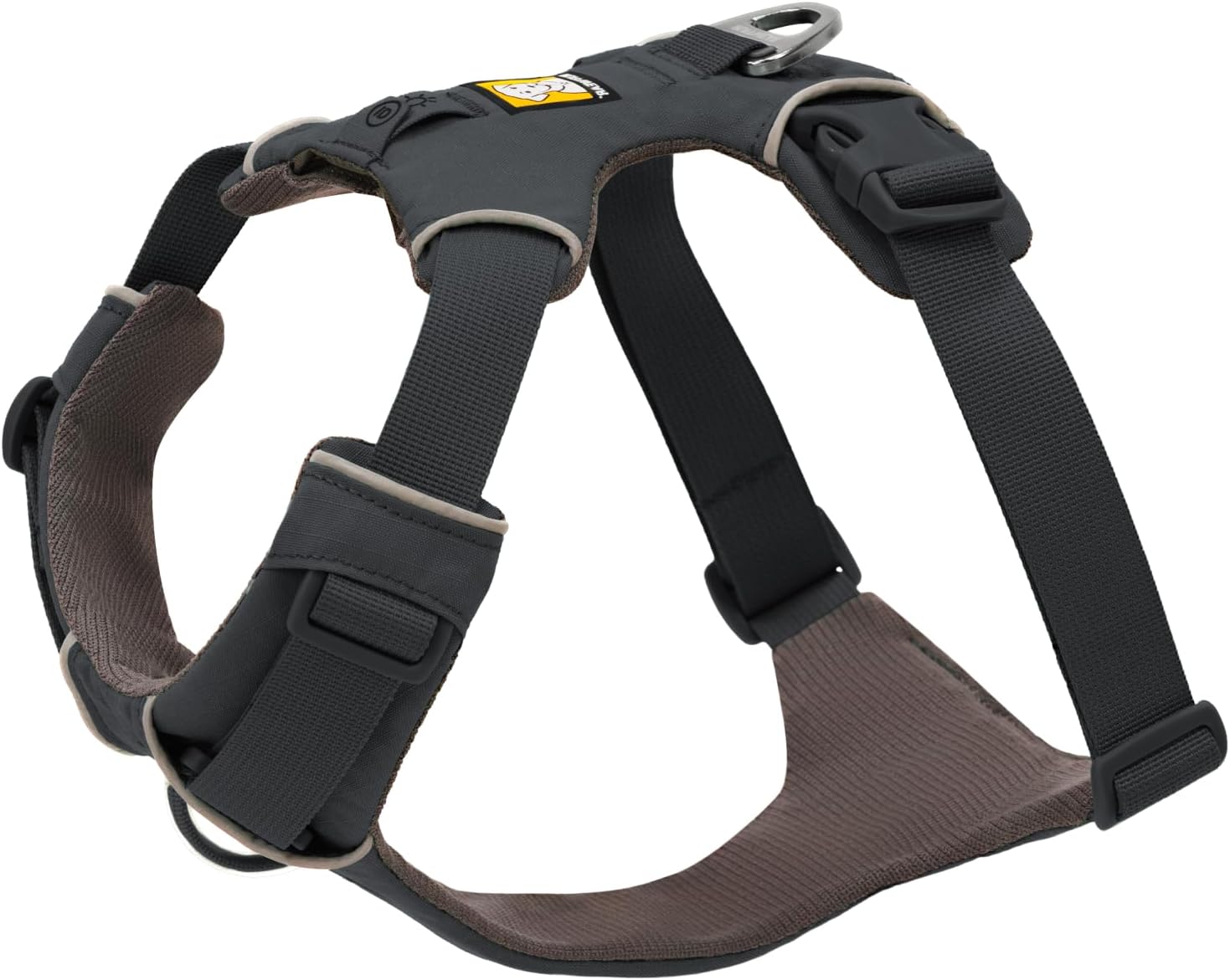
Pros
- Padded, per Ruffwear
- Front and back attachment points
- Maker publishes a fit guide
Cons
- Largest size stops at 42 in girth
- L/XL spans a 10 in girth range, so check the fit

Pros
- Standard 6 ft nylon leash
- Soft padding inside the handle grip
- Reflective, with a 360-degree metal clasp
Cons
- Single handle, no traffic handle
- Pick the width that matches your dog

Pros
- Thin and light, sized for small dogs
- Bolt snap hook, nickel-plated zinc clasp
- 1-year limited warranty listed
Cons
- No padding on the handle
- Too thin for large or strong dogs
Frequently Asked Questions
How long does it take to stop a dog from pulling?
It varies by dog, age and how often you practice. As noted above, VCA says most dogs need several months of regular practice to learn to walk on a loose leash. Steady, consistent sessions matter more than long ones.
Will a no-pull harness stop a dog from pulling?
Not by itself. A front-clip harness can turn your dog toward you when the leash tightens, and PetMD calls it a training tool. You still need to reward a loose leash and stop when your dog pulls.
Should you let your dog sniff on walks?
Yes, as a reward. The AKC recommends using sniffing and greetings as life rewards once your dog walks nicely, for example allowing a few minutes of sniffing after a stretch of loose-leash walking.
Is a retractable leash okay for leash training?
VCA advises avoiding retractable leashes, which can cause serious friction burns. A standard leash of about 6 to 10 feet is easier to manage while your dog is learning.
Sources
- American Kennel Club, How to Stop Your Dog From Pulling on the Leash
- VCA Animal Hospitals, Loose Leash Walking With Dogs
- PetMD, How to Stop Your Dog From Pulling on the Leash
- PetMD, How Do No-Pull Dog Harnesses Work?
- American Kennel Club, How to Teach a Puppy to Walk on a Leash
- Humane World for Animals, Which Type of Dog Collar Is Best for Your Dog?
About the author
James Anderson writes easy-to-follow articles about everyday dog care, with a focus on harnesses, collars, leashes and calmer daily walks. His content is general educational information and is not a substitute for advice from a veterinarian or qualified behavior professional.