
Best Family Dogs: 9 Breeds That Fit Homes With Kids
Nine dog breeds the AKC lists as good with young children, what makes a good family dog, and how to keep kids and dogs safe at home.
 By William Foster
Updated November 21, 2026

The best family dogs are friendly, patient and affectionate with everyone in the house, and breeds like the Labrador Retriever, Golden Retriever, Beagle and Cavalier King Charles Spaniel often top the list. But no breed guarantees a dog will be good with your kids. The individual dog’s personality, training and, above all, adult supervision matter more than the name on the pedigree.
The American Kennel Club’s family dog guide puts it simply: the right choice depends on your lifestyle, your home and your children’s ages, because some breeds are patient with younger kids while others do better with older children. This guide walks through what makes a good family dog, nine breeds the AKC places at the top of its “Good With Young Children” scale, and how to keep kids and dogs safe together.
What Makes a Good Family Dog
The AKC describes the goal as a dog with an outgoing, friendly personality who is loving and affectionate with the whole family. Beyond temperament, a few practical traits decide whether a dog fits your household day to day.
- Patience with children. The AKC notes that some breeds have “infinite patience,” others can play endlessly and still others are naturally protective of children. Think about which of those your family actually needs.
- Energy level. A high-energy dog needs daily exercise and mental work. If your schedule is already full with school runs and activities, a moderate-energy breed may be easier to live with.
- Size. Small dogs fit smaller homes, while large dogs can bump into or knock over a small child during play. Neither is automatically better, so think about your space and your children’s ages.
- Grooming and shedding. Some coats need brushing every day, others only occasionally. Heavy shedders mean more vacuuming, and if anyone in the house has allergies, see our guide to low-shedding dog breeds.
- Trainability. A dog that learns quickly makes house rules easier to teach, though every dog needs consistent, reward-based training. Our list of the smartest dog breeds explains why quick learners also need more mental exercise.
The AKC also points out that you may need to train your kids, too, so they learn how to interact with their new family companion. A well-chosen dog still depends on children who know how to treat it.
9 Breeds Often Recommended for Families
The breeds below each reach the top mark, “Good With Children,” on the “Good With Young Children” scale in their AKC breed profiles. The AKC adds that dogs should always be supervised around young children, or children of any age who have little exposure to dogs. Not every popular breed makes this cut: the AKC places the Bulldog in the middle of the same scale, labeled “With Supervision.”
| Breed | Typical weight (AKC) | Energy | Shedding | Coat care | Life expectancy |
|---|---|---|---|---|---|
| Labrador Retriever | 55 to 80 lb | High | Heavy | Low | 11 to 13 years |
| Golden Retriever | 55 to 75 lb | Moderate | Heavy | Low | 10 to 12 years |
| Beagle | Under 20 lb or 20 to 30 lb | Fairly high | Moderate | Low | 10 to 15 years |
| Cavalier King Charles Spaniel | 13 to 18 lb | Moderate | Light | Low | 12 to 15 years |
| Boxer | About 50 to 80 lb | Fairly high | Light | Low | 10 to 12 years |
| Standard Poodle | 40 to 70 lb | Fairly high | Minimal | High | 10 to 18 years |
| Newfoundland | 100 to 150 lb | Moderate | Moderate | Low | 9 to 10 years |
| Bichon Frise | 12 to 18 lb | Fairly high | Minimal | Daily | 14 to 15 years |
| Collie | 50 to 75 lb | Moderate | Moderate | Weekly | 12 to 14 years |
Weights combine the AKC’s male and female ranges. Energy, shedding and coat care reflect where each breed sits on the AKC’s own scales, which run from “Couch Potato” to “High Energy,” “No Shedding” to “Hair Everywhere,” and “Monthly” to “Daily” grooming. The AKC also notes that all breeds need regular nail trimming.
1. Labrador Retriever
The AKC describes Labs as friendly, outgoing, high-spirited companions for a family looking for a medium-to-large dog. Males stand 22.5 to 24.5 inches and weigh 65 to 80 pounds, with females a bit smaller. Labs sit at the top of the AKC’s energy scale and shed heavily, so plan for daily exercise and regular vacuuming. They also sit at the top of the AKC’s trainability scale.
2. Golden Retriever
Golden Retrievers are similar in size to Labs, with males at 65 to 75 pounds and females at 55 to 65 pounds. The AKC lists their energy as moderate and their trainability at the top of its scale. Expect heavy shedding and a life expectancy of 10 to 12 years.
3. Beagle
The AKC notes that Beagles enjoy company and are generally easygoing. The breed comes in two height varieties: 13 inches and under (under 20 pounds) and 13 to 15 inches (20 to 30 pounds). Beagles have fairly high energy and an easy-care coat, but their AKC profile places barking toward the high end, which matters if you share walls with neighbors. Their trainability sits in the middle of the scale, so patience helps.
4. Cavalier King Charles Spaniel
At 12 to 13 inches and 13 to 18 pounds, the Cavalier King Charles Spaniel is one of the smaller breeds on this list. The AKC’s guide to breeds for first-time owners calls Cavaliers good with all sorts of people, from young children to the elderly, and an overall low-maintenance breed. Energy is moderate, which suits families who want a dog that is happy with walks and play rather than long runs.
5. Boxer
The same AKC first-time owner guide describes Boxers as patient and spirited with children, but also protective, adding that they need little grooming but do need daily exercise. Male Boxers stand 23 to 25 inches and weigh 65 to 80 pounds, with females about 15 pounds lighter. Their playful, bouncy style is fun for older kids, while toddlers may need extra supervision around a dog this size.
6. Standard Poodle
The AKC describes the Standard Poodle as an elegant athlete under a curly, low-allergen coat. Standards stand over 15 inches, with males at 60 to 70 pounds and females at 40 to 50 pounds. Shedding is minimal, but the coat needs regular grooming to stay maintained. Poodles sit at the top of the AKC’s trainability scale and have one of the longest life expectancy ranges here, 10 to 18 years.
7. Newfoundland
The Newfoundland has earned a reputation as a patient and watchful “nanny dog” for kids, according to the AKC. It is also a giant: males weigh 130 to 150 pounds and females 100 to 120 pounds. Energy is moderate, but the size means you need space, a strong adult to handle the leash, and close supervision so a friendly bump does not topple a small child. Life expectancy is 9 to 10 years.
8. Bichon Frise
The Bichon Frise is a small dog at 9.5 to 11.5 inches and 12 to 18 pounds, with fairly high energy. The AKC calls it one of the world’s great “personality dogs.” Its coat sheds minimally but sits at the “Daily” end of the AKC’s grooming scale, so budget time for regular grooming. Life expectancy is 14 to 15 years, the longest minimum on this list.
9. Collie
Collies weigh 50 to 75 pounds and come in more than one coat variety, and the AKC notes the full-coated rough Collie is the more familiar one. Energy is moderate and grooming is weekly. Collies sit at the top of the AKC’s barking scale, so they tend to announce visitors and noises. Life expectancy is 12 to 14 years.
Consider Adopting an Adult Dog
With a puppy, you are guessing how its personality will turn out. With an adult dog, you can see it. The AKC’s case for adult dogs points out that you already know the dog’s temperament and how big it will be. Adult dogs also have the physical maturity to hold it for several hours, while young puppies need to go out every two to three hours, and they are usually past the stage of chewing everything in the house.
The ASPCA adds that adult animals need less supervision than puppies and that their personalities are fully formed, which makes them more predictable. That does not mean they cannot learn. The ASPCA notes adult animals can be amazingly adaptive.
If you have young children, ask the shelter or rescue directly about the dog’s history with kids. Best Friends Animal Society encourages families with small children to meet animals together so the right match is made, and when it places an adult dog with a family that has small children, it looks for a dog that is used to being around children. A dog with a known, kid-friendly track record can be a good match whether or not it belongs to a breed on the list above.
Keeping Kids and Dogs Safe
Even the gentlest family dog can bite. The CDC says children are more likely than adults to be bitten, their injuries tend to be more severe, and most bites to young children happen during everyday activities with familiar dogs. Any dog can bite, especially when it is scared, nervous, eating, or protecting toys or puppies.
The ASPCA’s bite prevention advice is direct: always supervise children and dogs, never leave a baby or young child alone with a dog, and teach children to treat the dog gently and with respect, giving it its own space and chances to rest. The ASPCA is also clear that you cannot guarantee a dog will never bite, only reduce the risk.
House rules that follow from these sources:
- Supervise every interaction between young children and the dog, even with a trusted family pet, as the CDC advises.
- Leave the dog alone while it is eating, sleeping or caring for puppies.
- Do not encourage rough play or roughhousing with the dog.
- Teach kids to ask before petting someone else’s dog and to let a new dog approach first.
- Watch for signs of a nervous dog. The ASPCA lists repeated lip licking, a tucked tail and trying to look smaller.
Age matters too. Best Friends suggests that from about six months to a year, children grab at whatever is in their path, including ears and tails, so pet food and feeding areas should be kept away from crawling and toddling children.
Preparing Your Home
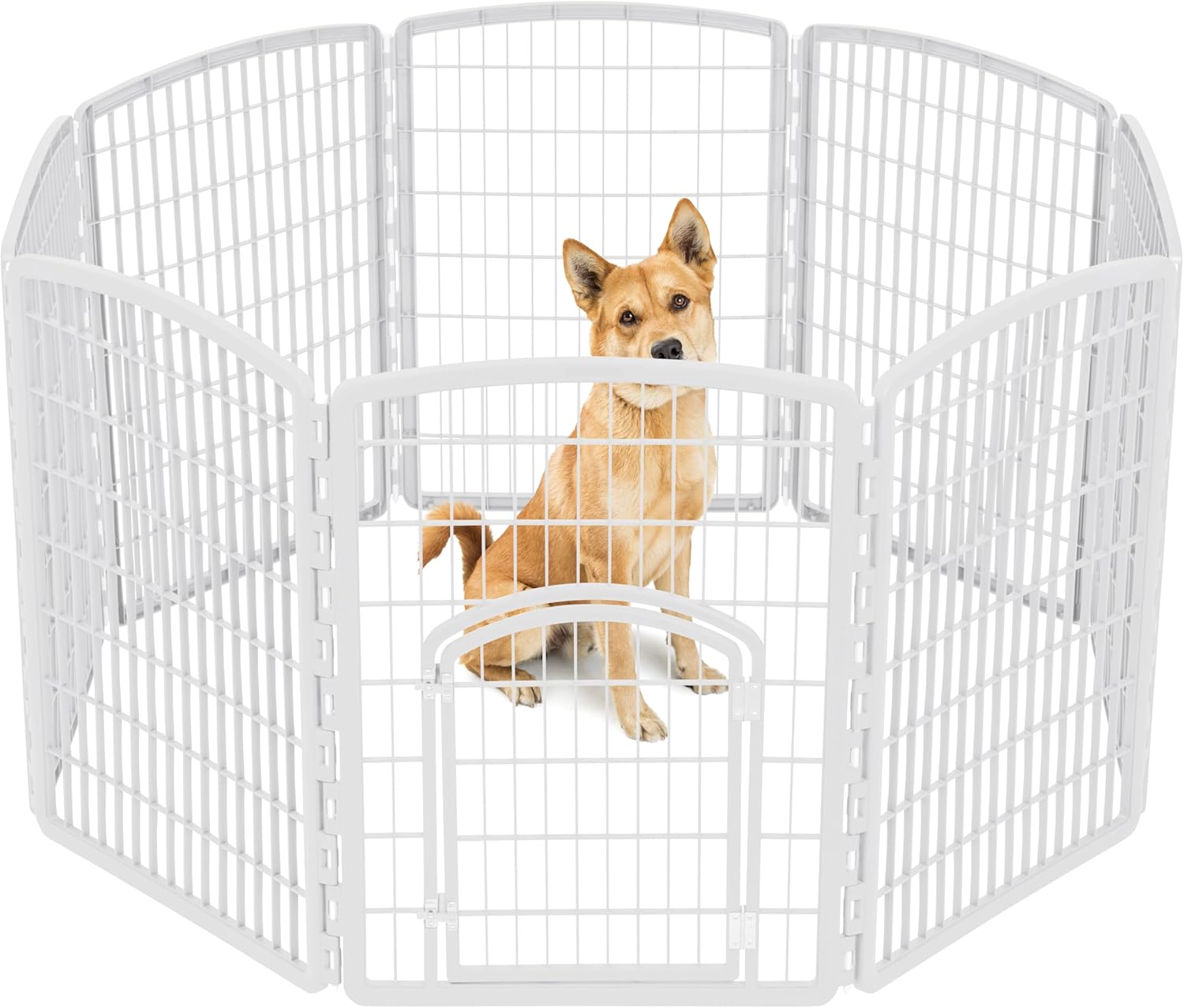
A family dog needs a place of its own where kids know not to follow. A crate or a gated pen in a quiet corner gives the dog a spot to rest, which fits the ASPCA’s advice above about giving your dog its own space. Our guide to the best dog crates by size and type can help you pick one that fits your dog.
Before day one, set up food and water bowls away from play areas, pick a leash and collar or harness for walks, and agree as a family on rules like who feeds the dog and where it sleeps. Our new puppy checklist covers the supplies to have ready, and a puppy training schedule by age shows what to teach first. The ASPCA also recommends starting puppy kindergarten classes as early as eight weeks, right after the first set of vaccinations.
Finally, the CDC suggests talking to your veterinarian about the right type of dog for your family before you buy or adopt, so the dog you choose fits your lifestyle and needs.
Tools That Help
These items match the home setup above: a crate or pen gives your dog its own space to rest away from busy play areas, and a leash and harness cover walks, since the ASPCA advises keeping your dog leashed in public. Size the crate or pen to your adult dog. Not sure which to pick? See dog crate vs playpen.
Pros
- Divider panel adjusts the space for a growing puppy
- Front and side doors
- Folds flat, with a top handle
Cons
- Tray hook must be locked after every setup
- Wire is not the prettiest option, as the AKC notes
Pros
- Heavy-duty molded plastic, easy to clean
- Rubber feet to protect floors
- Door built into front panel; add-on panels sold
Cons
- No ground stakes listed
- Listing gives no door size

Pros
- Thin and light, sized for small dogs
- Bolt snap hook, nickel-plated zinc clasp
- 1-year limited warranty listed
Cons
- No padding on the handle
- Too thin for large or strong dogs

Pros
- Front chest clip with a martingale loop
- 4 adjustment points
- Widest size range here, from 12 to 49 in girth
Cons
- No padding listed by the maker
- Eight overlapping sizes, so read the ranges carefully
Frequently Asked Questions
What is the best family dog for young kids?
There is no single best breed. Labrador Retrievers, Golden Retrievers, Beagles, Cavaliers, Boxers, Standard Poodles, Newfoundlands, Bichons and Collies all reach the top of the AKC’s “Good With Young Children” scale, but the individual dog’s temperament and your supervision matter more than breed.
Are small dogs or big dogs better with children?
Neither is automatically better. Small breeds like the Cavalier or Bichon suit smaller homes, while larger breeds like the Labrador can knock over a toddler during play. Match size and energy to your children’s ages and your space.
Is it better to get a puppy or an adult dog for a family?
An adult dog lets you see its temperament and size before you commit, and it usually needs less supervision and house training than a puppy, according to the AKC and ASPCA. Ask the shelter about the dog’s history with children.
Can a family dog be left alone with children?
No. The CDC and ASPCA both advise supervising young children around dogs at all times, even trusted family pets, because most bites to young children involve familiar dogs.
What family dogs shed the least?
Among the breeds in this guide, the Standard Poodle and Bichon Frise sit at the low end of the AKC’s shedding scale, though both need regular grooming. No dog is completely allergen-free.
Sources
- American Kennel Club: Best Family Dogs
- American Kennel Club: Best Dog Breeds for Kids
- American Kennel Club: 9 Great Dog Breeds for First-Time Owners
- American Kennel Club: Consider Adding an Adult Dog to Your Family
- American Kennel Club breed profiles: Labrador Retriever, Golden Retriever, Beagle, Cavalier King Charles Spaniel, Boxer, Poodle (Standard), Newfoundland, Bichon Frise, Collie, Bulldog
- ASPCA: Dog Bite Prevention
- ASPCA: An Older Pet May Be the Perfect Pet
- Best Friends Animal Society: Kids and Pets, Families with Children Adopting a Dog, Cat or Other Animal
- CDC: Dogs (Healthy Pets)
About the author
William Foster covers guides for people welcoming a new puppy or kitten, including first-week checklists, puppy and kitten care basics, preparing the home and building safe routines. Guides draw on VCA Animal Hospitals, the ASPCA, the AKC and International Cat Care and list the questions new owners should discuss with their veterinarian. William Foster does not hold veterinary credentials.