
10 Best Apartment Dogs: Small and Large Breeds for City Living
Ten breeds the AKC lists for apartments, from the French Bulldog to the Greyhound, compared on energy, barking and grooming, plus small-space tips.
 By William Foster
Updated November 28, 2026
The best apartment dogs are usually breeds that adapt well to change, are content with moderate exercise and don’t bark at every sound in the hallway. Small companion breeds like the Shih Tzu, French Bulldog, Havanese and Cavalier King Charles Spaniel fit that description, and so does one large breed many people don’t expect: the Greyhound. Size matters less than energy, noise and how well the dog handles routine changes, and the individual dog’s personality matters most of all. If you want to compare heights and weights across many breeds, see our chart of dog breeds by size.
The American Kennel Club’s guide to dogs for apartments notes that smaller breeds generally adapt well to confined spaces and don’t need a tremendous amount of exercise, but adds that many breeds make good apartment choices, “some of which you may not expect.” This guide covers what to look for, ten breeds the AKC lists for apartment living, how they compare on energy, barking and grooming, and how to set up a small home so any dog can settle in.
What Makes a Good Apartment Dog
A big backyard is not a requirement. The AKC’s guide to choosing the right dog says even apartment dwellers can share their home with some larger breeds, and that as long as a dog’s exercise needs are met through long walks, trips to the dog run and activity sessions, the living area doesn’t have to be a certain size. These are the traits worth checking on any breed profile before you decide.
- Energy level. A moderate-energy dog that is happy with daily walks and indoor play is easier in a small space than a dog bred to run all day. A tired dog is also a calmer neighbor.
- Barking. Shared walls carry sound. Breeds that tend to bark mainly to alert you are easier on neighbors, though any dog can learn to bark less with training.
- Adaptability. The AKC describes this trait as how easily a breed handles change, including living conditions, noise, weather and daily schedule. Elevators, hallway traffic and street noise are part of apartment life, so a highly adaptable breed has an advantage.
- A quiet spot of their own. Every dog needs a calm place to rest away from foot traffic. In a studio or one-bedroom, that is often a crate in a corner, and our guide to the best dog crates by size and type can help you pick one that fits both the dog and the floor plan.
- Grooming and shedding. Low-shedding coats often need more brushing and trims, while short coats need less grooming but may leave more hair around. If anyone in the home has allergies, see our list of low-shedding dog breeds.
- Time alone. The AKC suggests asking yourself how long you are away from home each day. Some companion breeds are not happy left alone for hours, which matters if you work long days away from home.
10 Breeds That Often Suit Apartment Life
The breeds below come from the AKC’s list of dogs for apartments. The trait levels quoted for each one come from its AKC breed profile, where each trait runs from 1 to 5. For energy, 1 is “Couch Potato” and 5 is “High Energy.” For barking, 1 is “Only To Alert” and 5 is “Very Vocal.”
1. French Bulldog
The AKC French Bulldog profile lists them at 11 to 13 inches tall and under 28 pounds, with the top adaptability level and a barking level of 1. The AKC says Frenchies don’t bark much but are alert watchdogs, and that a short walk or play session each day is usually enough exercise. As a flat-faced breed, they are prone to breathing difficulties and should never exert themselves in hot or humid weather.
2. Shih Tzu
Bred as a palace companion, the Shih Tzu needs only minimal exercise, and the AKC Shih Tzu profile says they make a great pet if you live in an apartment or lack a big backyard. Short daily walks and indoor play cover their activity needs. The tradeoff is the coat: a long coat needs daily brushing, though many owners keep it clipped short. The AKC also notes they don’t tolerate heat well.
3. Cavalier King Charles Spaniel
The AKC Cavalier profile describes a dog that can be an upbeat athlete or a “shameless couch potato” depending on the owner’s lifestyle. They stand 12 to 13 inches and weigh 13 to 18 pounds, enjoy moderate exercise and walks, and get along with children and other dogs. Because they keep scenting and hunting instincts, the AKC advises keeping them on leash, since they may not come back when called.
4. Pug
The AKC says the Pug is comfortable in a small apartment or a country home alike, and its AKC Pug profile gives the breed the top adaptability level and a barking level of 1. Pugs love the sofa and their food, so the AKC warns that obesity is a real possibility without daily moderate exercise; our guide to dog obesity covers the warning signs. Like other short-faced breeds, they do poorly in hot or humid weather, and their short coat still sheds.
5. Havanese
The AKC Havanese profile says the breed does well in both houses and apartments, but is not happy left alone for hours at a time. At 8.5 to 11.5 inches and 7 to 13 pounds, they get enough exercise from a brisk daily walk, playtime or romping indoors. The AKC calls them excellent watchdogs that usually keep barking to a minimum, though their barking level is 4 of 5, so expect some alert barking. The silky coat needs daily grooming unless kept short.
6. Bichon Frise
The AKC says the Bichon’s confidence and size make them ideal city dogs. Their AKC Bichon Frise profile describes long stretches of calm broken by brief bursts of high activity, so daily play sessions plus walks are a must. The Bichon sheds very little, but the coat needs brushing at least two or three times a week and a bath and clipping at least once a month, which is why most pet owners book a groomer every four to six weeks.
7. Maltese
Weighing under 7 pounds, the Maltese is the smallest breed on this list. The AKC Maltese profile says they are full of energy but need only occasional exercise, and daily walks or play indoors usually keep them fit. They are low-shedding alert watchdogs, but the long white coat needs gentle daily brushing. The AKC notes they can be stubborn and respond well to rewards-based training.
8. Bulldog
The Bulldog is heavier than it looks, at 40 to 50 pounds, but the AKC Bulldog profile describes a mellow dog that is happy to relax at your feet and needs regular moderate exercise to stay trim. Its barking level is 2 of 5. The AKC warns that the short muzzle makes breathing difficult in heat and humidity, so hot days belong in air conditioning, and that stairs and pools are major safety hazards. A ground-floor unit or an elevator building is worth considering.
9. Chinese Crested
The AKC Chinese Crested profile lists this toy breed at 11 to 13 inches and 8 to 12 pounds, with exercise needs that daily short walks and play sessions can usually meet. It comes in two varieties. The hairless type sheds very little but needs skin care and sunscreen or protective clothing outdoors, while the coated “Powderpuff” needs daily brushing.
10. Greyhound
The surprise on the AKC’s apartment list is a large dog. The AKC Greyhound profile lists males at 28 to 30 inches and 65 to 70 pounds, yet describes a dog that is perfectly happy to lounge around the house all day. The catch is that Greyhounds still need a regular exercise schedule and safe chances to run full-out, and they should only be off leash in a securely fenced area because they may chase anything that looks like prey. Their short coat needs little grooming.
Comparing the Breeds
All levels below come from each breed’s AKC profile, on a 1 to 5 scale. For grooming, 1 is “Monthly” and 5 is “Daily.” The AKC notes that all breeds need regular nail trimming.
| Breed | Height | Weight | Energy | Barking | Coat grooming | Adaptability |
|---|---|---|---|---|---|---|
| French Bulldog | 11 to 13 in | Under 28 lb | 3 | 1 | 1 | 5 |
| Shih Tzu | 9 to 10.5 in | 9 to 16 lb | 3 | 3 | 4 | 5 |
| Cavalier King Charles Spaniel | 12 to 13 in | 13 to 18 lb | 3 | 3 | 2 | 3 |
| Pug | 10 to 13 in | 14 to 18 lb | 3 | 1 | 2 | 5 |
| Havanese | 8.5 to 11.5 in | 7 to 13 lb | 3 | 4 | 3 | 5 |
| Bichon Frise | 9.5 to 11.5 in | 12 to 18 lb | 4 | 3 | 5 | 4 |
| Maltese | 7 to 9 in | Under 7 lb | 3 | 3 | 4 | 4 |
| Bulldog | 14 to 15 in | 40 to 50 lb | 3 | 2 | 3 | 3 |
| Chinese Crested | 11 to 13 in | 8 to 12 lb | 3 | 3 | 2 | 4 |
| Greyhound | 27 to 30 in | 60 to 70 lb | 4 | 3 | 1 | 4 |
Breed traits describe tendencies, not promises. The AKC reminds readers that each dog is different, so meet the individual dog and ask the breeder or rescue about its energy and noise level. If you also have children, compare this list with our guide to the best family dogs, and if you want a dog that learns tricks fast, our list of the smartest dog breeds explains why quick learners also need more mental work.
Tips for Apartment Life
Any dog can struggle in a small space if its needs are not met, whatever its breed. These habits help most dogs settle in.
- Plan exercise into every day. Without a yard, walks are your dog’s main outlet. Follow the exercise needs on the breed profile, and add short indoor play or puzzle toys on busy or rainy days.
- Give the dog a quiet base. The ASPCA’s adoption tips suggest a dedicated space such as a room, a cozy crate or a soft bed where a new dog can decompress.
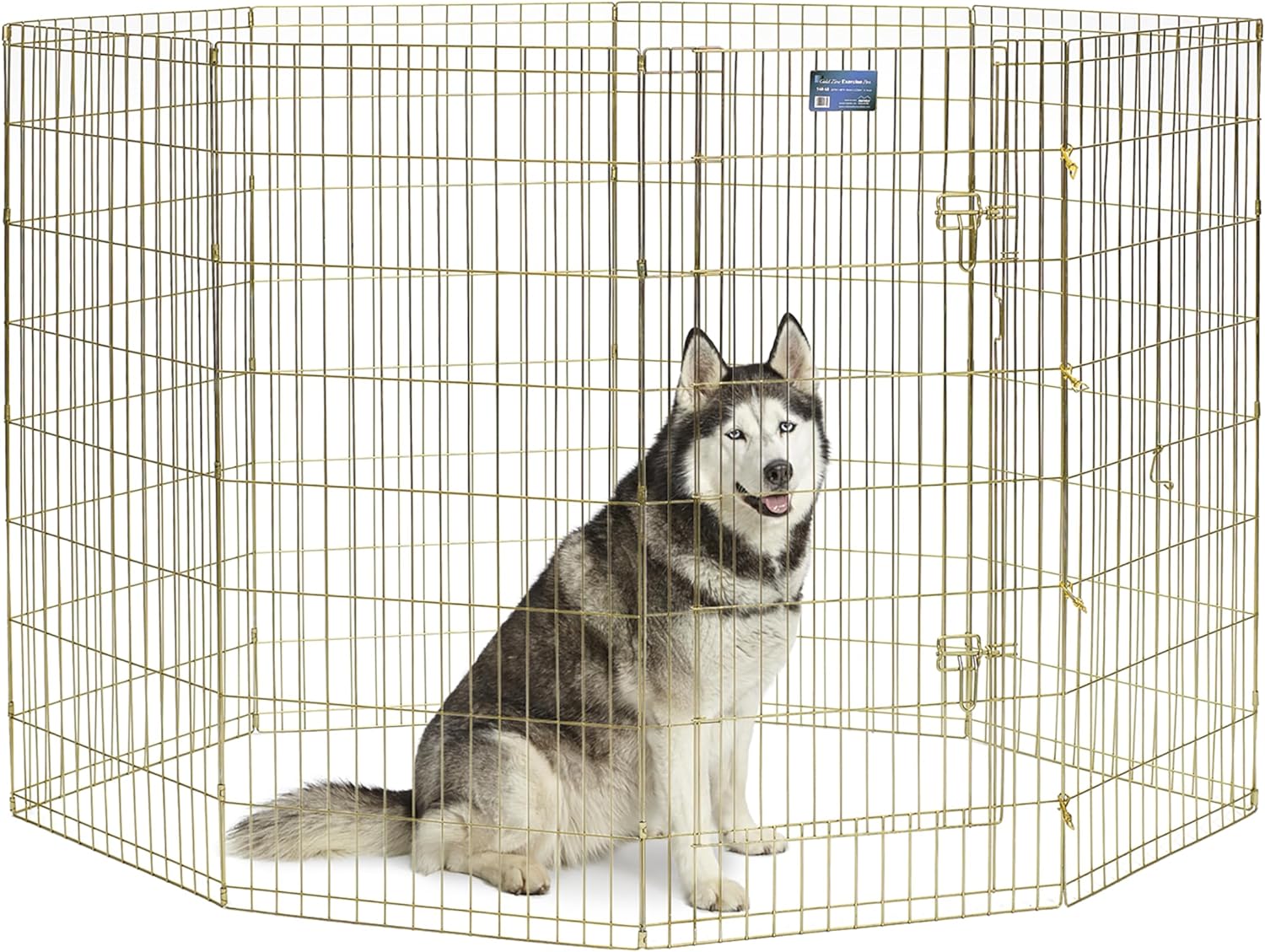
- Use a pen or gates for time alone. The ASPCA suggests gates to limit access to certain areas while a dog adjusts. A playpen gives more room than a crate during the day, and our roundup of the best dog playpens for indoors and out compares sizes and materials.
- Work on barking early. Neighbors hear barking through shared walls and hallways. Our guide on how to stop a dog from barking covers reward-based ways to reduce alert barking at hallway sounds.
- Dog-proof the space. The ASPCA recommends securing cords, windows and doors and removing chewable items before a new dog arrives.
- Check your lease first. Read your lease or ask your landlord about any pet rules before you commit to a dog.
Before bringing a dog home, our new puppy checklist lists the supplies to have ready on day one. Schedule a visit with a veterinarian soon after, especially for short-faced breeds that are sensitive to heat.
Consider Adopting an Adult Dog
With an adult dog, you can see its energy level and how it behaves indoors before you commit. The AKC notes that you can find purebred or rescued dogs through the AKC Rescue Network, as well as older dogs in rescues. According to the ASPCA, there are nearly 5,000 animal shelters and more than 9,500 animal rescues in the U.S., and many publish short bios describing each pet’s personality and needs.
Tell the shelter you live in an apartment and ask which dogs are calm indoors and quiet when left alone. Expect an adjustment period: the ASPCA’s 3-3-3 guideline describes a nervous first three days, three weeks of settling in and about three months before a pet’s true personality shows.
Tools That Help
These supplies cover the basics from the tips above: a quiet base, a safe area for time alone, daily walks and indoor brain work. For more crate options by size and type, see our guide to the best dog crates.
Affiliate disclosure: As an Amazon Associate I earn from qualifying purchases. Links to Amazon in this article are affiliate links. Learn more.

Pros
- Divider panel adjusts the space for a growing puppy
- Front and side doors
- Folds flat, with a top handle
Cons
- Tray hook must be locked after every setup
- Wire is not the prettiest option, as the AKC notes
Pros
- Eight 24 x 48 in panels, 16 sq ft area
- Double-latch door
- Attaches to most crates; optional tops sold
Cons
- Heavier at 31.8 lb
- Listing disagrees on number of ground anchors

Pros
- Thin and light, sized for small dogs
- Bolt snap hook, nickel-plated zinc clasp
- 1-year limited warranty listed
Cons
- No padding on the handle
- Too thin for large or strong dogs

Pros
- Level 1 beginner puzzle for dogs new to puzzles
- Nine treat compartments; holds 1/2 cup of food
Cons
- Bones lift off, so a quick learner may outgrow it
Frequently Asked Questions
What is the best dog for apartment living?
There is no single best breed. Breeds the AKC lists for apartments include the French Bulldog, Shih Tzu, Cavalier King Charles Spaniel, Pug, Havanese, Bichon Frise, Maltese, Bulldog, Chinese Crested and Greyhound. Choose based on energy, barking, grooming time and how long the dog would be alone each day.
Can large dogs live in apartments?
Yes, some can. The AKC says apartment dwellers can share their home with some larger breeds as long as the dog’s exercise needs are met, and it lists the Greyhound, a dog of 60 to 70 pounds, among its apartment picks because it is happy to lounge indoors.
What are quiet dog breeds for apartments?
On the AKC barking scale, the French Bulldog and Pug sit at level 1, “Only To Alert,” and the Bulldog at level 2. No breed is silent, and individual dogs vary, so training still matters.
Are small dogs always better for apartments?
Not always. The AKC says smaller breeds generally adapt well to confined spaces, but energy and barking matter more than size. A small, high-energy or very vocal dog can be harder in an apartment than a calm large dog.
How much exercise does an apartment dog need?
It depends on the breed and the individual dog. The AKC breed profiles range from short daily walks for the Shih Tzu and French Bulldog to regular chances to run full-out for the Greyhound. Ask your veterinarian what is right for your dog’s age and health.
Sources
- American Kennel Club: Best Dogs for Apartments
- American Kennel Club: What Dog Is Right for Me? How to Choose the Perfect Breed
- ASPCA: Navigating Adoption, Finding and Welcoming Home Your Pet
- AKC: French Bulldog Breed Profile
- AKC: Shih Tzu Breed Profile
- AKC: Cavalier King Charles Spaniel Breed Profile
- AKC: Pug Breed Profile
- AKC: Havanese Breed Profile
- AKC: Bichon Frise Breed Profile
- AKC: Maltese Breed Profile
- AKC: Bulldog Breed Profile
- AKC: Chinese Crested Breed Profile
- AKC: Greyhound Breed Profile
About the author
William Foster covers guides for people welcoming a new puppy or kitten, including first-week checklists, puppy and kitten care basics, preparing the home and building safe routines. Guides draw on VCA Animal Hospitals, the ASPCA, the AKC and International Cat Care and list the questions new owners should discuss with their veterinarian. William Foster does not hold veterinary credentials.