
Dog Breeds by Size: Small, Medium and Large
Dog breeds by size: AKC height and weight ranges for popular small, medium, large and giant breeds, plus what size means for crates, food and care.
 By William Foster
Updated November 28, 2026
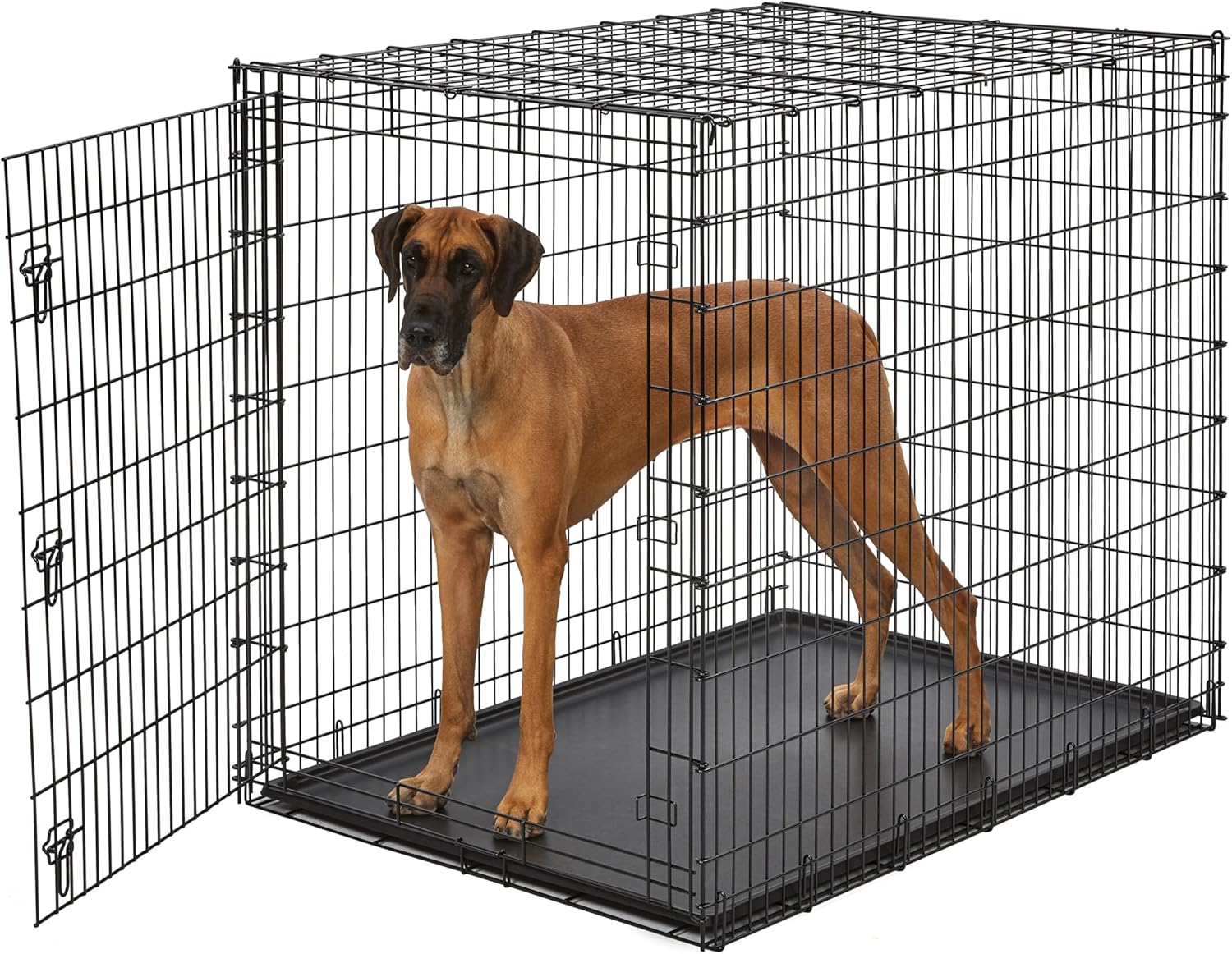
There is no single official weight cutoff that splits dogs into small, medium and large. The American Kennel Club publishes breed lists by size, but its smallest dog breeds page and its medium and large lists do not state a pound or inch threshold. What each breed does have is an official height and weight range in its AKC breed standard, and that is the most useful number when you plan for a crate, food and daily exercise.
This guide groups popular breeds by those AKC standard ranges, shows them side by side in one table, and explains what size changes in daily care. If you already know roughly how big your dog will be, our dog crate size guide shows how to measure, and our roundup of the best dog crates by size and type covers options from small to giant.
How Dog Size Is Defined
The AKC sorts breeds into groups by original purpose, such as herding or toy, not by weight. Its size pages are browsing lists, and the small list notes that small dogs are part of many AKC groups. The AKC medium dog breeds page simply describes these dogs as “not too big; not too small.”
Veterinary nutrition sources do use a number, but only for feeding. VCA Animal Hospitals explains that a puppy food labeled for growth “including large dogs” is meant for dogs expected to weigh more than 70 pounds as adults. That is a pet food labeling line, not a breed category.
To keep things practical, this article uses a simple reference grouping based on AKC standard weights. It is our convention, not an AKC rule:
- Small: breeds whose standard tops out around 30 pounds or less.
- Medium: breeds that fall roughly between 30 and 60 pounds.
- Large: breeds whose adults usually weigh more than about 60 pounds.
- Giant: breeds where adults commonly reach 100 pounds or more.
Some breeds sit on a line between two groups, and individual dogs vary. Mixed breed dogs can land anywhere, so for a puppy of unknown background, ask your veterinarian how large the dog is likely to get.
Small Dog Breeds
Small breeds cover a wide range, from dogs that weigh a few pounds to sturdy companions near 30 pounds. The AKC notes that small dogs do not necessarily need to work off loads of energy, which makes many of them suitable for apartment life, but not all small dogs are lap warmers. Breeds like Dachshunds and small terriers also enjoy room to run.
Chihuahua
The AKC Chihuahua standard lists a height of 5 to 8 inches and a weight not exceeding 6 pounds.
Pomeranian
The AKC Pomeranian profile gives 6 to 7 inches and 3 to 7 pounds.
Yorkshire Terrier
According to the AKC Yorkshire Terrier page, the breed stands 7 to 8 inches and weighs about 7 pounds.
Shih Tzu
The AKC Shih Tzu standard lists 9 to 10.5 inches and 9 to 16 pounds.
Cavalier King Charles Spaniel
The AKC Cavalier profile gives 12 to 13 inches and 13 to 18 pounds.
Dachshund
Dachshunds come in two sizes. The AKC Dachshund standard lists 8 to 9 inches and 16 to 32 pounds for the standard size, and 5 to 6 inches and 11 pounds and under for the miniature.
French Bulldog
The AKC calls the French Bulldog one of the world’s most popular small dog breeds. Its AKC breed page lists 11 to 13 inches and under 28 pounds.
Pembroke Welsh Corgi
Corgis are short but solid. The AKC Pembroke Welsh Corgi standard gives 10 to 12 inches and up to 30 pounds for males and up to 28 pounds for females.
The AKC also points out that some small dogs are too delicate for a boisterous household with very young children. If you have toddlers, plan a quiet space where the dog can be alone.
Medium Dog Breeds
Medium breeds include some of the most familiar family dogs. The AKC medium list notes that some are calmer by nature, like the Bulldog or the Whippet, while others are more energetic, like the Brittany or the Shetland Sheepdog. Two breeds below, the Beagle and the Cocker Spaniel, sit on the line between small and medium.
Beagle
The AKC Beagle standard has two height varieties: 13 inches and under at under 20 pounds, and 13 to 15 inches at 20 to 30 pounds.
Cocker Spaniel
The AKC Cocker Spaniel page lists 14.5 to 15.5 inches and 25 to 30 pounds for males, and 13.5 to 14.5 inches and 20 to 25 pounds for females.
Bulldog
The Bulldog is short but heavy. The AKC Bulldog standard gives 14 to 15 inches, about 50 pounds for males and 40 pounds for females.
Border Collie
The AKC Border Collie profile lists 19 to 22 inches for males, 18 to 21 inches for females, and 30 to 55 pounds. Our list of the smartest dog breeds covers what this busy herder needs day to day.
Australian Shepherd
According to the AKC Australian Shepherd page, males stand 20 to 23 inches and weigh 50 to 65 pounds, and females stand 18 to 21 inches and weigh 40 to 55 pounds.
Siberian Husky
The AKC describes the Siberian Husky as a dog of medium size. Its AKC breed standard lists 21 to 23.5 inches and 45 to 60 pounds for males, and 20 to 22 inches and 35 to 50 pounds for females.
Large and Giant Dog Breeds
The AKC’s largest dog breeds page notes that many big dogs are relatively calm inside the house and suit suburban or country homes with room to sprawl. It adds that many large dogs can live in apartments if they get daily exercise, and that regular activity is a must.
Labrador Retriever
The AKC describes the Labrador as a medium-to-large dog. The AKC Labrador Retriever standard lists 22.5 to 24.5 inches and 65 to 80 pounds for males, and 21.5 to 23.5 inches and 55 to 70 pounds for females.
Golden Retriever
The AKC Golden Retriever page gives 23 to 24 inches and 65 to 75 pounds for males, and 21.5 to 22.5 inches and 55 to 65 pounds for females.
Boxer
The AKC Boxer standard lists 23 to 25 inches and 65 to 80 pounds for males. Females stand 21.5 to 23.5 inches and are about 15 pounds lighter than males.
German Shepherd Dog
The AKC German Shepherd Dog page gives 24 to 26 inches and 65 to 90 pounds for males, and 22 to 24 inches and 50 to 70 pounds for females. Our guide to guard dog breeds covers this and other large protective breeds.
Bernese Mountain Dog
The Bernese sits on the line between large and giant. Its AKC breed standard lists 25 to 27.5 inches and 80 to 115 pounds for males, and 23 to 26 inches and 70 to 95 pounds for females.
Newfoundland
The AKC Newfoundland page gives an average height of 28 inches for males and 26 inches for females, with weights of 130 to 150 pounds and 100 to 120 pounds.
Great Dane
The AKC Great Dane standard lists 30 to 32 inches and 140 to 175 pounds for males, and 28 to 30 inches and 110 to 140 pounds for females.
Mastiff
The AKC Mastiff profile gives 30 inches and up for males and 27.5 inches and up for females, with weights of 160 to 230 pounds and 120 to 170 pounds.
Dog Breeds by Size Chart
Heights are measured at the shoulder. Where the AKC lists one range for both sexes, it appears once.
| Breed | Size group (our grouping) | AKC height | AKC weight |
|---|---|---|---|
| Chihuahua | Small | 5 to 8 in | Not exceeding 6 lb |
| Pomeranian | Small | 6 to 7 in | 3 to 7 lb |
| Yorkshire Terrier | Small | 7 to 8 in | 7 lb |
| Shih Tzu | Small | 9 to 10.5 in | 9 to 16 lb |
| Cavalier King Charles Spaniel | Small | 12 to 13 in | 13 to 18 lb |
| Dachshund | Small | 8 to 9 in (standard), 5 to 6 in (miniature) | 16 to 32 lb (standard), 11 lb and under (miniature) |
| French Bulldog | Small | 11 to 13 in | Under 28 lb |
| Pembroke Welsh Corgi | Small | 10 to 12 in | Up to 30 lb (M), up to 28 lb (F) |
| Beagle | Small to medium | 13 in and under, or 13 to 15 in | Under 20 lb, or 20 to 30 lb |
| Cocker Spaniel | Small to medium | 14.5 to 15.5 in (M), 13.5 to 14.5 in (F) | 25 to 30 lb (M), 20 to 25 lb (F) |
| Bulldog | Medium | 14 to 15 in | 50 lb (M), 40 lb (F) |
| Border Collie | Medium | 19 to 22 in (M), 18 to 21 in (F) | 30 to 55 lb |
| Australian Shepherd | Medium | 20 to 23 in (M), 18 to 21 in (F) | 50 to 65 lb (M), 40 to 55 lb (F) |
| Siberian Husky | Medium | 21 to 23.5 in (M), 20 to 22 in (F) | 45 to 60 lb (M), 35 to 50 lb (F) |
| Labrador Retriever | Large | 22.5 to 24.5 in (M), 21.5 to 23.5 in (F) | 65 to 80 lb (M), 55 to 70 lb (F) |
| Golden Retriever | Large | 23 to 24 in (M), 21.5 to 22.5 in (F) | 65 to 75 lb (M), 55 to 65 lb (F) |
| Boxer | Large | 23 to 25 in (M), 21.5 to 23.5 in (F) | 65 to 80 lb (M), females about 15 lb less |
| German Shepherd Dog | Large | 24 to 26 in (M), 22 to 24 in (F) | 65 to 90 lb (M), 50 to 70 lb (F) |
| Bernese Mountain Dog | Large to giant | 25 to 27.5 in (M), 23 to 26 in (F) | 80 to 115 lb (M), 70 to 95 lb (F) |
| Newfoundland | Giant | 28 in (M avg), 26 in (F avg) | 130 to 150 lb (M), 100 to 120 lb (F) |
| Great Dane | Giant | 30 to 32 in (M), 28 to 30 in (F) | 140 to 175 lb (M), 110 to 140 lb (F) |
| Mastiff | Giant | 30 in and up (M), 27.5 in and up (F) | 160 to 230 lb (M), 120 to 170 lb (F) |
What Size Means for Daily Care
Crates and pens
Expected adult size drives crate size. A dog should be able to stand, turn around and lie down comfortably, so measure your dog rather than relying on breed alone. For a growing large breed puppy, plan for the adult size and use a divider or a smaller crate while the puppy is young.
Food and growth
Size matters most for puppies. VCA notes that the difference in growth between a Great Dane puppy and a Chihuahua is huge, and that large and giant breed puppies can take up to two years to reach their adult weight. Puppies cannot regulate how much calcium they absorb, so too much calcium can lead to skeletal problems, and growing too quickly can stress developing bones and joints. Look for a food labeled for growth that includes large dogs if your puppy is expected to top 70 pounds, and see our picks for the best puppy food for small and large breeds.
The switch to adult food also depends on size. The AKC’s puppy feeding guide says small breed puppies may move to adult food around 7 to 9 months, while large breed puppies often stay on puppy food until at least 12 months and sometimes longer. Your veterinarian can track growth with a growth curve and tell you when to switch.
Aging
Size also changes when a dog is considered senior. VCA’s senior dog care guide says there is no one age at which dogs become senior, but giant breeds like Great Danes are seniors at five or six years, while small breeds may be considered senior at 10 to 12 years.
Space and exercise
Size alone does not predict energy. A small terrier can be busier than a large, calm breed, and the AKC notes that many large dogs can do well in apartments with daily exercise. Our guide to the best apartment dogs covers small and large breeds that adapt well to city living.
Choosing the Right Size for Your Home
- Your space: think about stairs, elevators and how much floor space a full-grown dog and its bed will take up.
- Who lives with you: very small dogs may need protection from rough play with toddlers, while a large puppy can knock over small children by accident.
- Lifting and travel: you may need to lift your dog into a car or carry it to the vet. A 7 pound Yorkie and a 150 pound Newfoundland are very different jobs.
- Grooming and allergies: coat type matters as much as size. If someone in the home has allergies, see our list of low-shedding dog breeds.
- Daily time: match the breed’s activity needs, not just its size, to the time you have for walks and play.
For breeds that tend to fit busy homes with children, see our guide to the best family dogs. Every dog is an individual, so meet the dog and talk with the breeder, shelter or your veterinarian before you decide.
Tools That Help
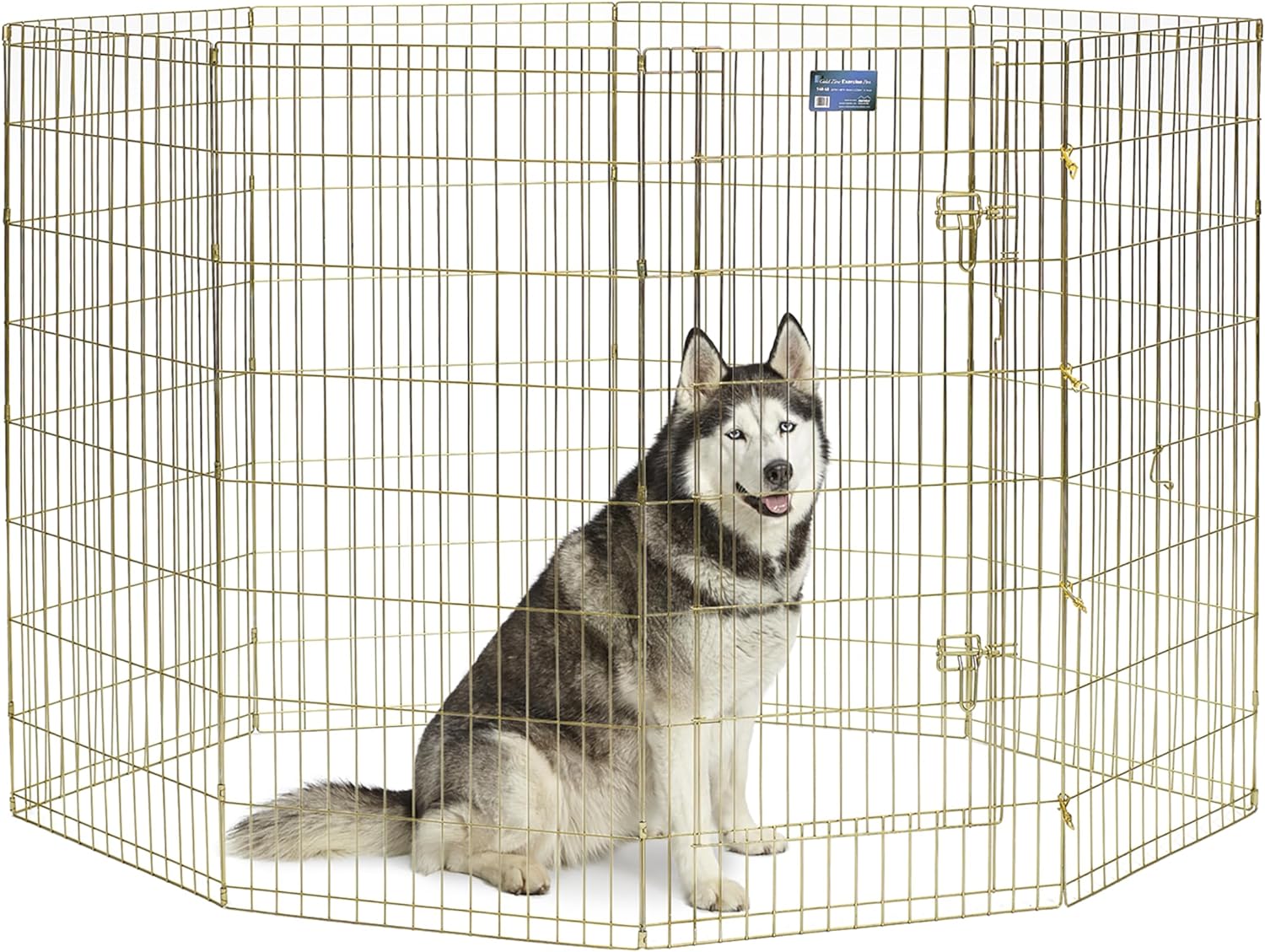
These items match the sizing advice above: a mid-size wire crate for many medium breeds, a giant-breed crate for dogs over 100 pounds, and an exercise pen for puppies of any size. For more options by dog size, see our full guide to the best dog crates.
Affiliate disclosure: As an Amazon Associate I earn from qualifying purchases. Links to Amazon in this article are affiliate links. Learn more.

Pros
- Divider panel adjusts the space for a growing puppy
- Front and side doors
- Folds flat, with a top handle
Cons
- Tray hook must be locked after every setup
- Wire is not the prettiest option, as the AKC notes
Pros
- 54 x 37 x 45 in, for dogs over 100 lb
- Drop-pin construction with L-bar reinforcement
- Leak-proof tray and rubber feet
Cons
- No divider included
- Heavy at 81.7 lb; two-person assembly
Pros
- Eight 24 x 48 in panels, 16 sq ft area
- Double-latch door
- Attaches to most crates; optional tops sold
Cons
- Heavier at 31.8 lb
- Listing disagrees on number of ground anchors
Frequently Asked Questions
What weight is considered a small, medium or large dog?
There is no single official cutoff. The AKC lists breeds by size without stating weight thresholds. As a practical reference, many people think of dogs up to about 30 pounds as small, about 30 to 60 pounds as medium, and over 60 pounds as large, with giant breeds commonly reaching 100 pounds or more.
Is a Labrador a medium or large dog?
The AKC describes the Labrador Retriever as a medium-to-large dog. Its standard lists 65 to 80 pounds for males and 55 to 70 pounds for females, which puts most Labs in the large group by weight.
What is the smallest dog breed?
Among popular breeds, the Chihuahua is one of the smallest. Its AKC standard lists 5 to 8 inches and a weight not exceeding 6 pounds. The Pomeranian, at 3 to 7 pounds, is similar in weight.
Does a large breed puppy need special food?
VCA recommends a food labeled for growth that includes large dogs for puppies expected to weigh more than 70 pounds as adults, because growing too fast or getting too much calcium can affect developing bones. Ask your veterinarian which food and portion fit your puppy.
How can I tell how big my mixed breed puppy will get?
Breed standards only apply to purebred dogs. For a mixed breed puppy, your veterinarian can estimate adult size and track growth over time, which helps you pick the right crate and food.
Conclusion
Dog size is not set by one official scale, but AKC breed standards give clear height and weight ranges for each breed. Use those ranges, or your veterinarian’s estimate for a mixed breed puppy, to plan the right crate, a growth food for large breeds, and a home and routine that fit the dog you bring home.
Sources
- American Kennel Club: Smallest Dog Breeds
- American Kennel Club: Medium Dog Breeds
- American Kennel Club: Largest Dog Breeds
- American Kennel Club: Puppy Feeding Fundamentals
- American Kennel Club breed pages: Chihuahua, Pomeranian, Yorkshire Terrier, Shih Tzu, Cavalier King Charles Spaniel, Dachshund, French Bulldog, Pembroke Welsh Corgi, Beagle, Cocker Spaniel, Bulldog, Border Collie, Australian Shepherd, Siberian Husky, Labrador Retriever, Golden Retriever, Boxer, German Shepherd Dog, Bernese Mountain Dog, Newfoundland, Great Dane and Mastiff (linked above)
- VCA Animal Hospitals: Puppy Nutrition: Feeding Large and Giant Breeds
- VCA Animal Hospitals: Senior Dog Care
About the author
William Foster covers guides for people welcoming a new puppy or kitten, including first-week checklists, puppy and kitten care basics, preparing the home and building safe routines. Guides draw on VCA Animal Hospitals, the ASPCA, the AKC and International Cat Care and list the questions new owners should discuss with their veterinarian. William Foster does not hold veterinary credentials.